July 3, 2026· 7 min read
Inside Bedlam: The Hospital That Turned Suffering Into a Spectacle
For centuries, London's Bethlehem Hospital didn't just house the mentally ill — it put them on display for paying visitors, and gave the English language a word for chaos.

Strange Fact
For much of the 17th and 18th centuries, you could buy a ticket to watch the patients of Bethlehem Royal Hospital go about their misery.
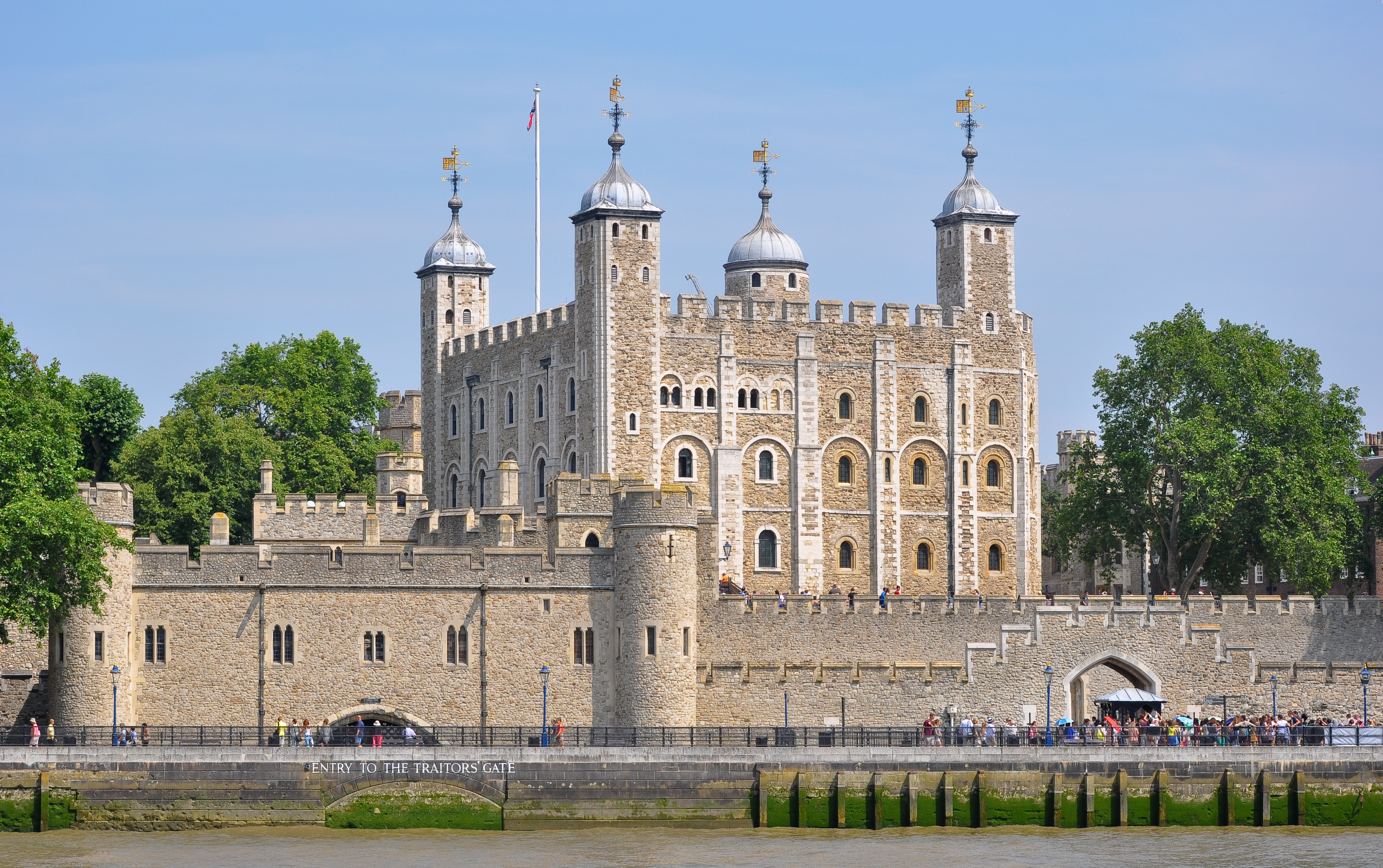
Families came on Sunday afternoons. Gentlemen brought their dates. Children pointed and laughed. The hospital, known almost universally as Bedlam, admitted somewhere between 40,000 and 96,000 visitors per year at its peak, making it one of London's most popular tourist attractions — ranked alongside the Tower of London and the Royal Menagerie.
The patients were not asked for their consent.
Historical Background
Bedlam's origins are surprisingly modest. In 1247, a priory dedicated to the Star of Bethlehem was established in Bishopsgate, on the northeastern edge of the City of London. It was founded by Simon FitzMary, a former Sheriff of London, as part of a wave of charitable religious institutions that dotted medieval England.
For its first century and a half, Bethlehem functioned as a general house of hospitality for visiting clergy and the destitute poor. There was nothing particularly remarkable about it.
The shift came gradually. By 1403, the first formal records appear of Bethlehem caring for individuals described as mentally unwell — six patients in total, listed in a royal survey. The priory had, quietly and without fanfare, become something new: one of the earliest dedicated psychiatric institutions in Europe.
This transformation did not happen in isolation. Medieval Europe had no coherent framework for understanding mental illness. Explanations ranged from demonic possession to divine punishment to an imbalance of the body's four humors. Those who suffered from what we might today recognize as schizophrenia, severe depression, or bipolar disorder were often viewed as moral failures, spiritual casualties, or objects of fear.
Bethlehem absorbed these attitudes along with its patients.
What Happened
The Palace of Madness
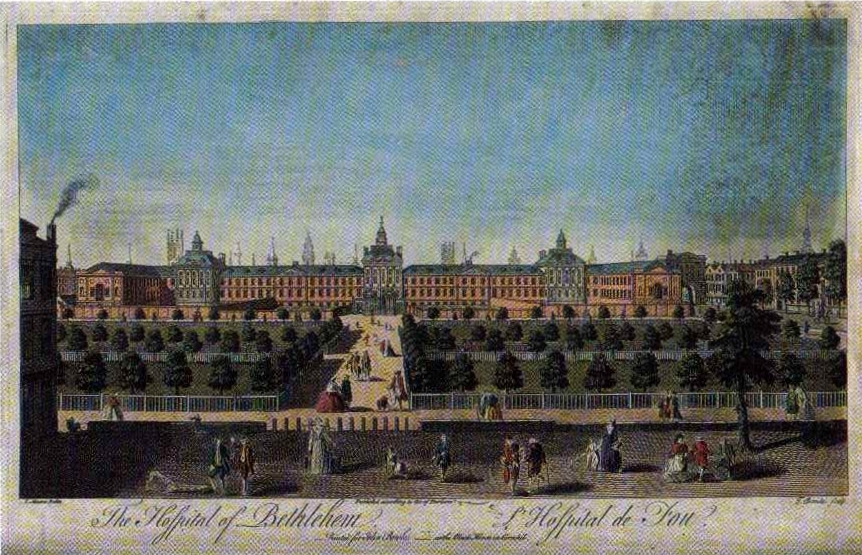
In 1676, Bedlam relocated to a grand new building in Moorfields, north of the City. The architect Robert Hooke designed a structure so imposing and ornate that critics mocked it as excessive for a hospital housing the indigent and disturbed. Contemporaries noted the irony: the building looked like a palace, while the people inside it were treated like animals.
And that, in a sense, is exactly what they were treated like.
The hospital opened its doors to the paying public. For a small fee — and sometimes for free on certain days — Londoners could walk the long gallery corridors and observe the patients in their cells. The experience was considered educational, even morally instructive. Witnessing the consequences of vice, excess, and ungodliness, so the thinking went, was a useful reminder to live virtuously.
In practice, it was something far uglier.
Patients were chained to walls. Some were kept in cages. Attendants used physical restraints as a first resort, not a last one. Treatments of the era included cold-water immersion, bloodletting, purging, and rotating chairs designed to spin patients into unconsciousness — all administered with the confidence of men who believed they were practicing medicine.
Visitors observed this, and many found it amusing.
The Language of Chaos
Bedlam's reputation spread far beyond its walls. Playwrights seized on it. In The Duchess of Malfi (1612), John Webster used Bedlam madmen as theatrical props, their ravings meant to terrify and entertain. William Hogarth's famous print series A Rake's Progress (1735) ends with its protagonist locked in Bedlam, surrounded by figures of grotesque disorder, while well-dressed ladies look on with detached curiosity.
The word bedlam entered common speech as a synonym for chaos and uproar, a usage that has survived to the present day. Few people who use the word casually know they are referencing a specific building on a specific street in London, or the specific suffering that happened inside it.
By the mid-18th century, public unease about Bedlam's practices was beginning to surface. Reports of neglect, abuse, and the casual cruelty of attendants circulated in pamphlets and newspapers. A parliamentary inquiry in 1815 produced testimony so disturbing that it became one of the catalysts for wholesale reform of Britain's treatment of the mentally ill.
Among the findings: patients had been chained in the same positions for years. One man, James Norris, had been held in an iron harness for over a decade.
The Reform Movement
Change came from several directions at once. In France, the physician Philippe Pinel had already begun unchaining patients at the Bicêtre Hospital in Paris in the 1790s, arguing that the mentally ill were sick people who deserved medical care, not punishment. His approach, known as moral treatment, emphasized calm environments, routine, and human dignity.
In England, the Quaker businessman William Tuke established the York Retreat in 1796 on similar principles, offering a model of care so different from Bedlam that it shocked contemporaries simply by being humane.
The 1815 parliamentary hearings accelerated this momentum. Bedlam itself was eventually reformed, rebuilt, and relocated. It moved to St George's Fields in Southwark in 1815, and later to Beckenham in Kent, where it continues to operate today as the Bethlem Royal Hospital, a modern psychiatric facility that takes its history seriously enough to maintain an archive and museum on site.
Why It Was Strange
What makes the Bedlam story genuinely strange is not simply that it was cruel. History is full of cruelty.
What is stranger is the social logic that sustained it.
The people who visited Bedlam on Sunday afternoons were not, for the most part, sadists. They were ordinary Londoners who had been told, and genuinely believed, that what they were doing was reasonable. The hospital administrators who chained patients to walls were not operating outside the medical consensus of their time. They were the consensus.
This is the deeper discomfort the history of Bedlam offers: the gap between what a society considers normal and what future generations will consider monstrous can be very small, and very invisible, from the inside.
The patients themselves left almost no written record. Their names were often replaced by their diagnoses in official documents. Their experience exists only in fragments — in inspection reports, in the accounts of reformers who visited them, in the occasional letter smuggled out.
They were not spectacles. They were people. It took centuries for the institution that housed them to fully accept that fact.
Historical Legacy
Bedlam's influence on language, culture, and medical history is difficult to overstate.
- The word bedlam remains in active use in English, meaning noisy disorder or confusion.
- The hospital's history contributed directly to the Lunacy Acts of the 19th century, which established legal protections for psychiatric patients in Britain for the first time.
- The 1815 parliamentary inquiry into Bedlam is considered a foundational moment in the history of mental health reform in the English-speaking world.
- The Bethlem Museum of the Mind, located at the current hospital site, preserves artworks made by patients across several centuries, offering a rare glimpse into the inner lives of people who were otherwise silenced.
- Scholars of medical history continue to cite Bedlam as a case study in how institutional power can normalize harm when it goes unchallenged.
Perhaps most importantly, Bedlam forced a question that medicine had avoided: what do we actually owe to people whose minds work differently from the majority? That question did not originate in Bedlam, but it was sharpened there, against the hard edge of everything the hospital got wrong.
The echoes have not entirely faded.
Sources

Written by
The History, But Strange Team
We dig into the weirdest, strangest, and most forgotten corners of real history. From bizarre royal scandals to unusual medical practices and darkly funny disasters, our team researches and writes about the stories your textbooks left out.