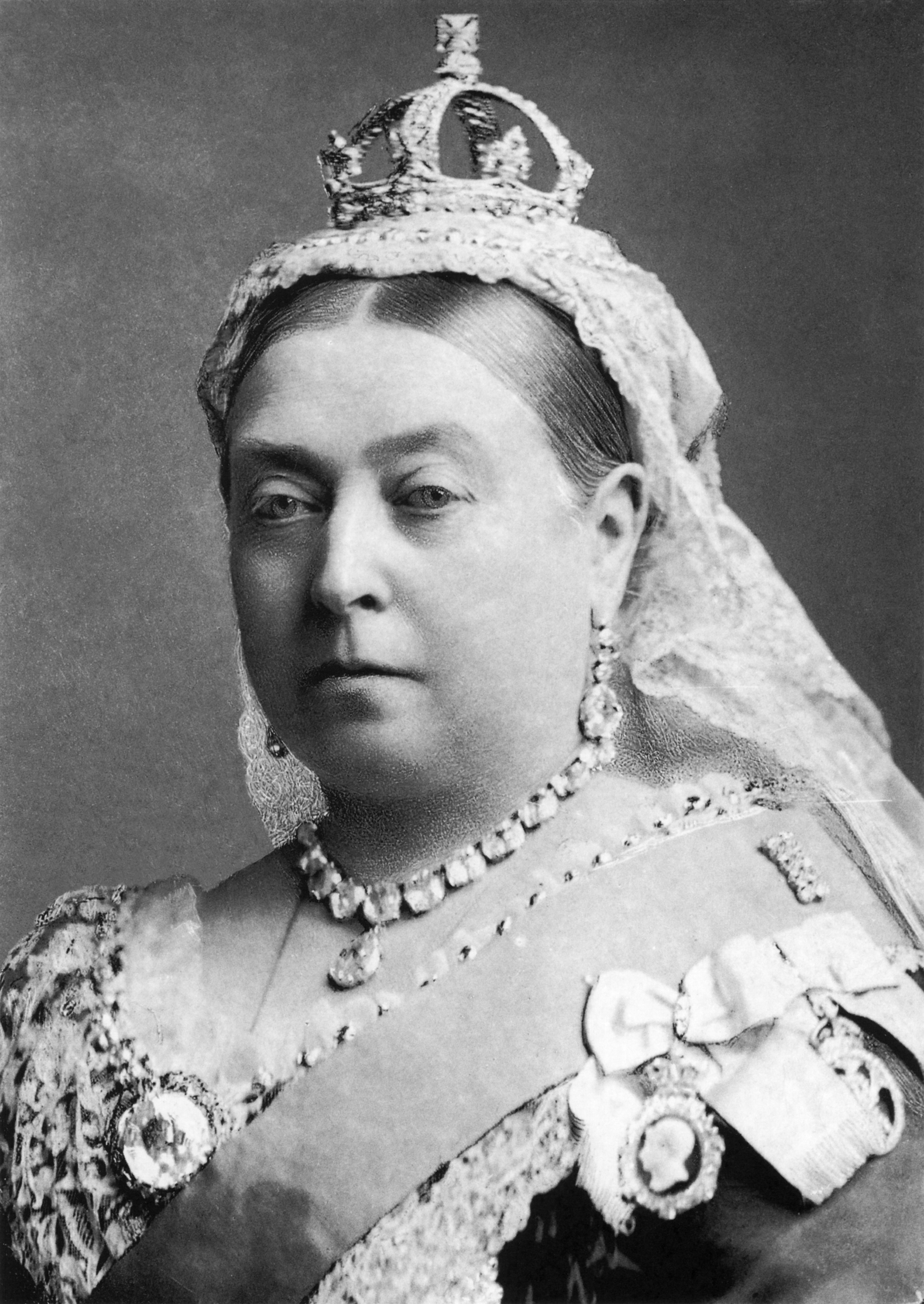
Victorian
Alexandrina Victoria
Queen of the United Kingdom of Great Britain and Ireland, Empress of India
Biography
A Prisoner in a Palace
Alexandrina Victoria did not have a fairy-tale royal childhood. She was raised under the notoriously strict "Kensington System," an oppressive, isolated upbringing designed by her ambitious mother and Sir John Conroy to keep her utterly dependent. She wasn't allowed to walk down the stairs without holding an adult's hand and was forced to sleep in her mother's bedroom until the very day she became queen at age 18. Her immediate response to gaining the throne? Asking for an hour entirely by herself and banishing her mother to a distant part of the palace.
The Extreme Sport of Mourning
When her beloved husband Prince Albert died in 1861, Victoria didn't just grieve; she turned mourning into a forty-year obsession. Earning the nickname "The Widow of Windsor," she draped herself entirely in black for the rest of her life and forced the royal court to follow suit. But the strangest part was her daily routine:
- She commanded servants to lay out Albert's fresh clothes, shaving gear, and hot water every single morning.
- His chamber pot was faithfully cleaned as if he were still using it.
- She kept a plaster cast of his hand by her side to hold.
Her morbid fascination with death set a deeply macabre trend for the entire Victorian era, popularizing bizarre mourning jewelry made from human hair.
Assassins, Appetites, and Strange Requests
Victoria was a bizarrely aggressive eater. Royal protocol dictated that once the Queen finished a course, all plates were cleared immediately. Since she inhaled her gargantuan meals at lightning speed, dinner guests frequently went hungry. Beyond her terrifying dining habits, she was practically unkillable, surviving an astonishing eight assassination attempts by deranged poets and fame-seekers. When she finally passed away, her secret burial instructions were incredibly strange: she was buried with a lock of her controversial servant John Brown's hair, a photograph of him, and his mother's wedding ring clutched in her hand, forever hidden beneath a bouquet of flowers.
Strange Facts (5)
Connection Map
Drag nodes to explore · Click to read more
Connected Strange History
Life Timeline (19)
Sources
"Victoria: A Life" by A.N. Wilson; "Queen Victoria" by Lytton Strachey; The Royal Archives