Ancient
Marcus Aurelius Antoninus
Roman Emperor and Stoic Philosopher
Biography
The Reluctant Emperor
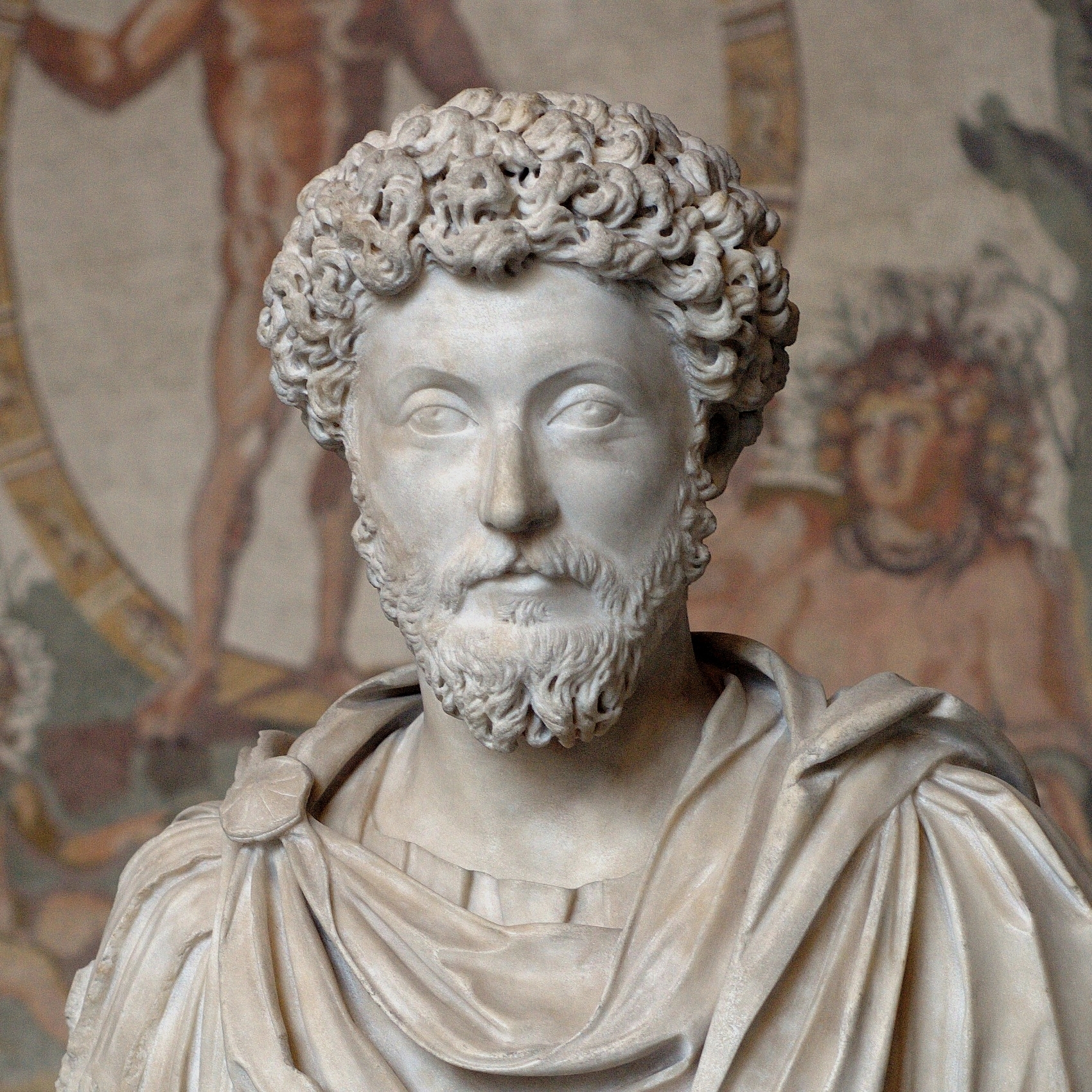
Marcus Aurelius was the last of the so-called "Five Good Emperors," and frankly, he probably would have preferred to just sit in a tranquil garden and read. Instead, he spent most of his nineteen-year reign in freezing, mud-soaked military camps along the Danube, desperately fighting off aggressive Germanic tribes. To cope with the stress of endless war, he wrote his now-famous Meditations—a completely private diary of Stoic philosophy. In it, he repeatedly reminded himself not to get angry at treacherous idiots, to embrace duty, and to accept that everyone eventually dies. It’s deeply profound, yet highly relatable to anyone enduring a terrible modern staff meeting.
Paradoxical Bloodbaths
For a man who constantly preached about inner peace and cosmic harmony, his reign was a remarkably strange nightmare of blood and disease. He unintentionally presided over the Antonine Plague, a devastating global pandemic (likely smallpox or measles) brought back by his own victorious soldiers, which wiped out an estimated five to ten million people across the empire. Furthermore, despite his enlightened views on the brotherhood of humanity, Marcus didn't shy away from the gruesome brutality of his era. He actively sanctioned the persecution of early Christians and enthusiastically oversaw massive, blood-soaked gladiatorial games to keep the restless Roman mob happy. It is a very stark contrast to his peaceful journal entries.
The Ultimate Parenting Fail
Perhaps the most bizarre paradox of his entire life is his destructive legacy. He broke a long-standing Roman tradition of adopting a highly capable successor by leaving the vast empire to his biological son, Commodus. Here are a few horrifying highlights of the boy raised by Rome's greatest philosopher:
- He genuinely believed he was the reincarnation of Hercules and clubbed countless defenseless people to death in the arena.
- He officially renamed the city of Rome, the legions, and the months of the year after himself (Colonia Commodiana).
- He was ultimately strangled in his bath by his personal trainer, a wrestler named Narcissus. So much for effectively passing down all that timeless stoic wisdom!
Sources
Historia Augusta, Cassius Dio's Roman History, Marcus Aurelius's Meditations