Modern
Martin Luther King Jr.
Civil Rights Leader and Reverend
Biography
The Man Named Michael
Most people don't know that one of history's greatest orators was originally born Michael King Jr. It wasn't until his father took a trip to Germany in 1934, became immensely inspired by the 16th-century Protestant reformer Martin Luther, and decided to change both of their names. Even more ironically, the man whose booming voice would eventually move millions actually received a C in public speaking during his first year at Crozer Theological Seminary! When he wasn't studying theology, he also spent his downtime hustling as a remarkably skilled pool player.
The FBI's Bizarre Obsession
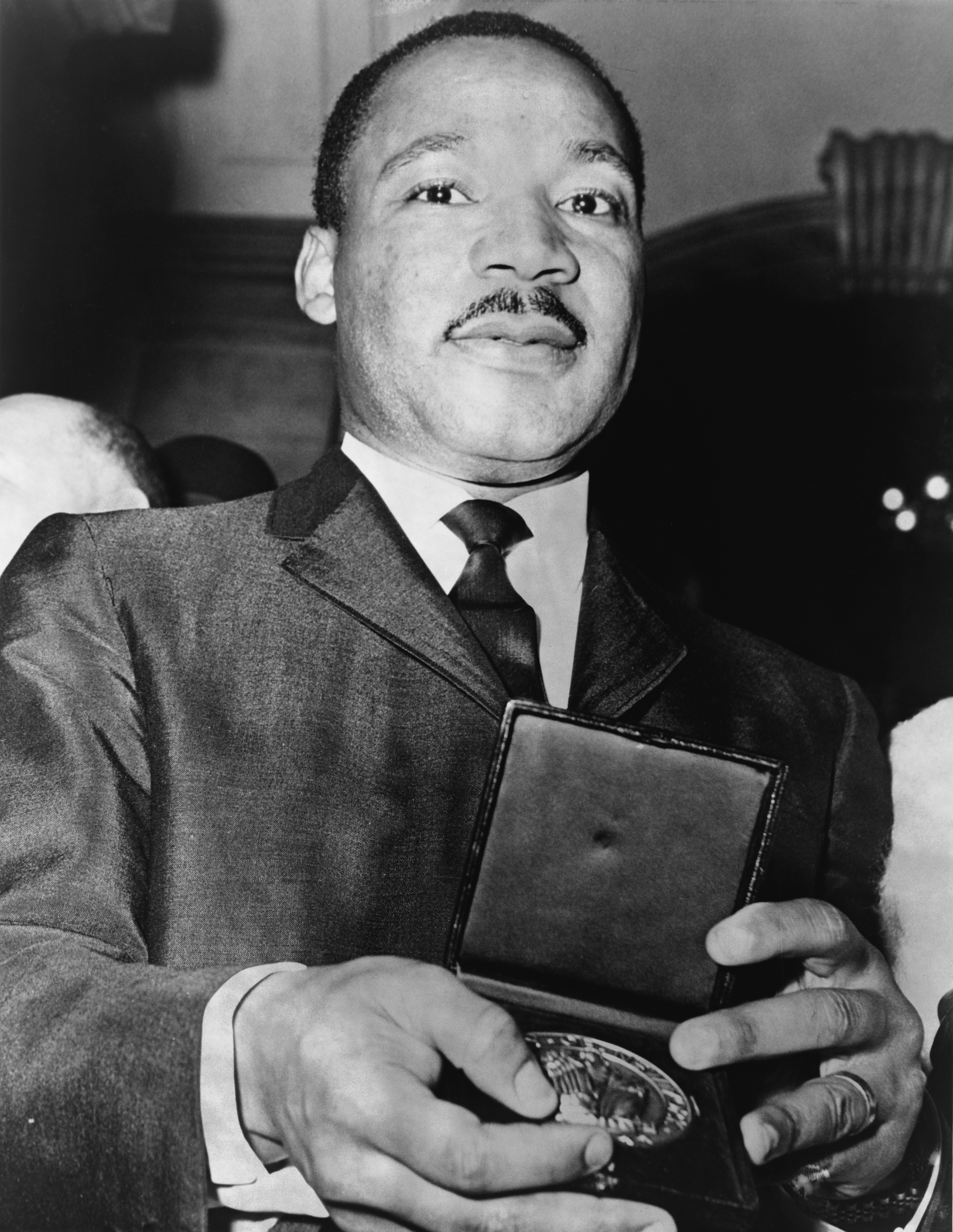
As King's influence exploded, he became the target of one of the strangest and most unhinged government surveillance campaigns in American history. J. Edgar Hoover's FBI bugged King's hotel rooms, tapped his phones, and dug relentlessly for dirt. In 1964, the agency actually sent King an anonymous, threatening "suicide package" containing an audio tape of his alleged infidelities. The bizarre accompanying letter implicitly urged King to end his own life before he could accept the Nobel Peace Prize.
A Record of "Crimes"
King's commitment to nonviolent civil disobedience meant he compiled a rap sheet that would make a career outlaw blush. He was arrested 29 times throughout his life, turning the concept of crime and punishment entirely on its head.
- 1956: Arrested for driving 30 mph in a 25 mph zone, a flimsy excuse to harass him during the Montgomery bus boycott.
- 1963: Arrested for protesting without a permit, leading to his famous "Letter from Birmingham Jail," which he initially had to write on the margins of a smuggled newspaper because he was denied writing paper in solitary confinement.
Ultimately, King proved that sometimes the laws themselves are the real crime, using his own frequent imprisonments to highlight the absurdity of segregation.
Sources
The Autobiography of Martin Luther King Jr. (edited by Clayborne Carson); FBI Records: The Vault (COINTELPRO files); The Martin Luther King, Jr. Research and Education Institute at Stanford University.