June 19, 2026· 6 min read
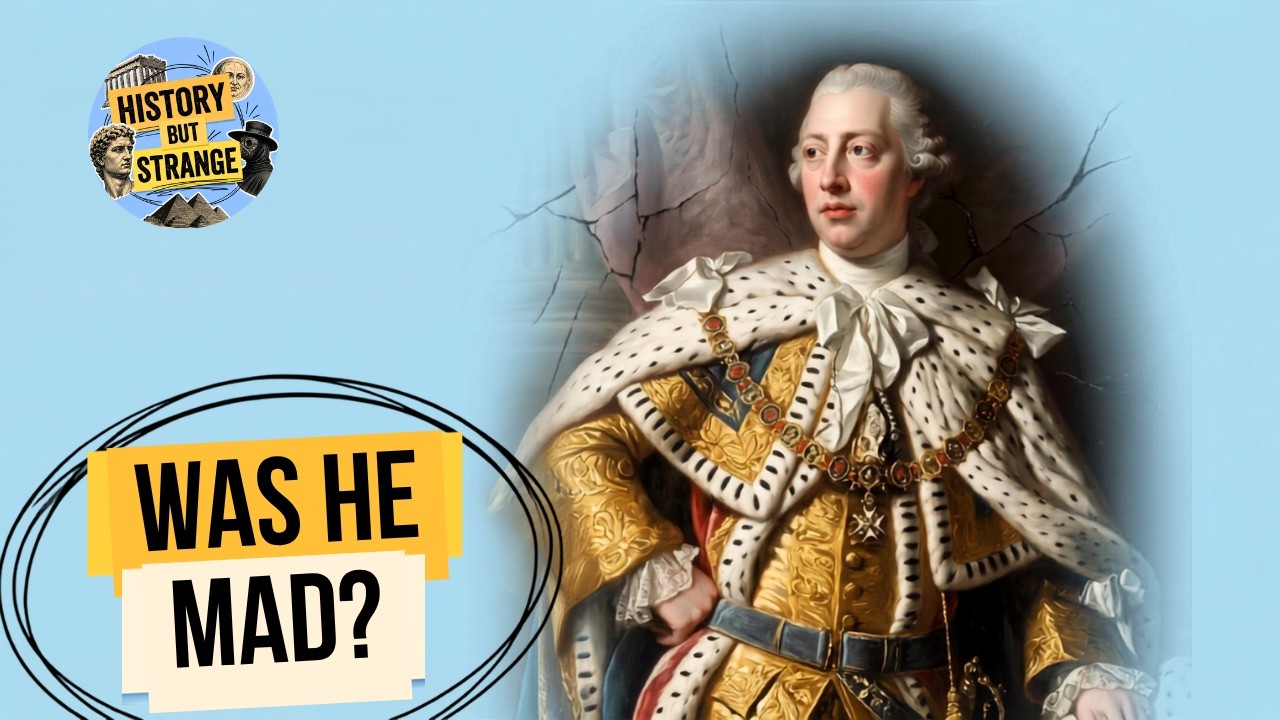
The King Who Could Not Stop Talking: George III's 58-Hour Episode That Shook the British Court
In the summer of 1788, the most powerful monarch in the Western world locked himself in a room and talked without pause for nearly three days and his court was too afraid to stop him.
Historical Figures

Strange Fact
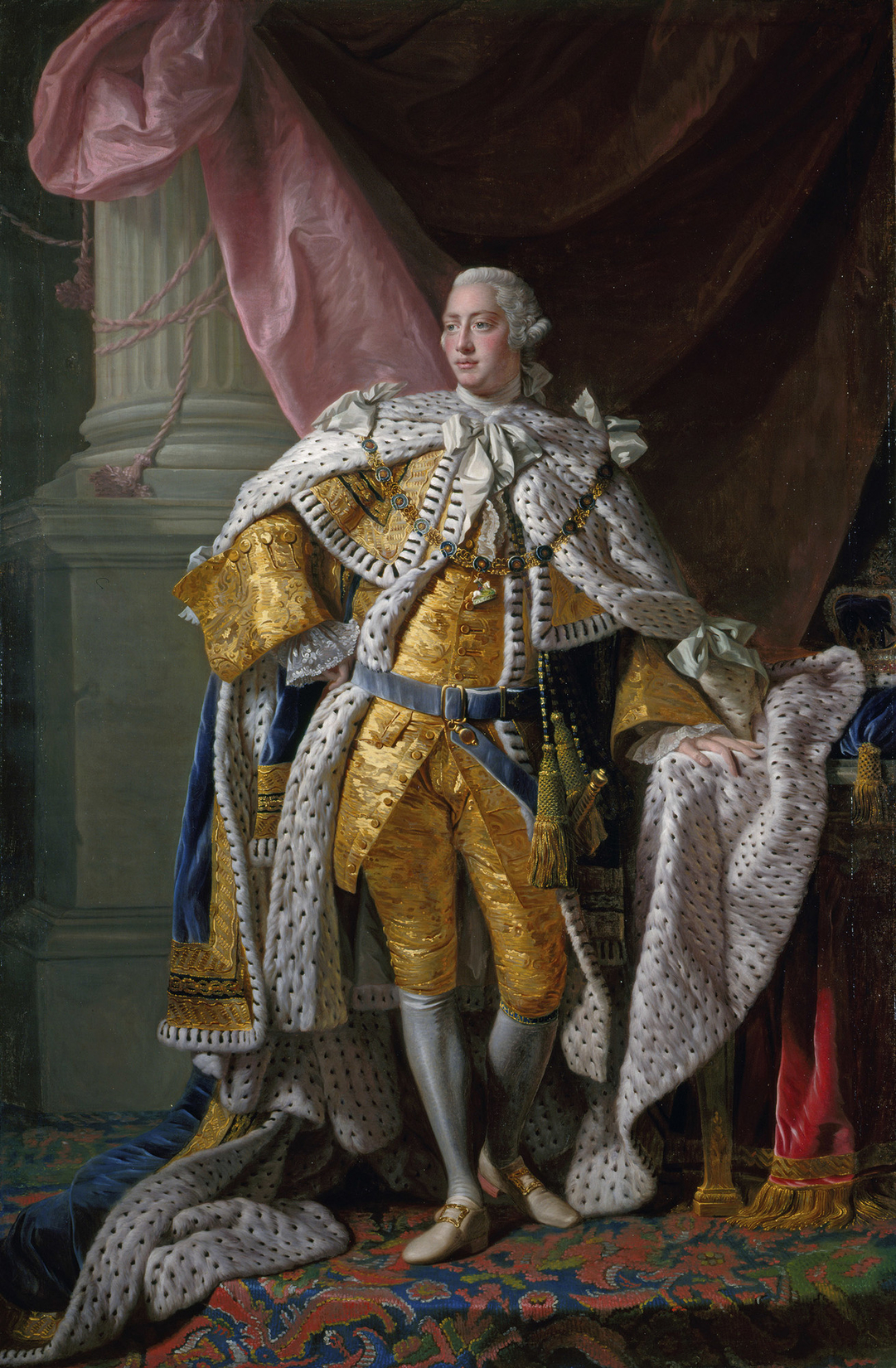
Sometime around June 20, 1788, King George III of Great Britain began talking. And then he kept talking. For 58 hours straight, the monarch spoke without meaningful rest — rambling, frothing at the mouth, and at times descending into what witnesses described as pure gibberish. His courtiers, bound by protocol and sheer terror, remained nearby. They could not leave. They could not intervene. They could only wait.
The incident was concealed from Parliament for months.
Historical Background
By 1788, George III had reigned for nearly 28 years. He had overseen the loss of the American colonies, navigated years of political turbulence, and cultivated a public image as a plain-spoken, dutiful king — nicknamed "Farmer George" for his unpretentious habits. He was not a monarch given to excess or spectacle.
But something had been wrong for years.
George had experienced earlier bouts of unusual behavior — agitation, restlessness, episodes of physical illness paired with mental confusion. Contemporaries did not have a clinical vocabulary for what they were seeing. The word most reached for, inevitably, was madness.
In the 18th century, mental illness carried no framework for treatment beyond restraint and the occasional cold bath. Physicians were largely baffled. Courtiers were largely silent. A king who showed signs of losing his mind was not merely a medical problem — he was a constitutional crisis waiting to happen.
What Happened
The summer of 1788 marked a turning point. George's physical health had been deteriorating alongside his mental state — he suffered from abdominal pain, weakness in his limbs, and an alarming discoloration of his urine, recorded at the time but poorly understood.
Then came the episode in June.
George locked himself — or effectively confined himself — in his chambers and began to talk. Witnesses reported that he spoke with extraordinary, relentless energy. He moved between coherent observations and wild digressions, looping back on subjects, addressing people who were not present, and at intervals producing sounds that no longer resembled language at all.
The 58-hour figure comes from accounts by those who attended him during this period. It is not a precise clinical record — Georgian court documentation was rarely that candid — but multiple sources corroborate the broad outline: the king talked, nearly without pause, for the better part of three days.
His lips reportedly became raw. He frothed at the mouth. His eyes, witnesses noted, had taken on a strange, fixed quality.
Courtiers stood outside and nearby, paralyzed by a protocol that offered no guidance for this situation. You did not simply walk away from the King of Great Britain. You did not silence him, restrain him, or summon help in any way that might publicize what was happening. So they stayed. And they listened, or pretended to listen, to a man who could not stop.
The Cover-Up
What followed the episode was, in many ways, as remarkable as the episode itself.
The British government — specifically the king's ministers — kept the full extent of his condition from Parliament for months. This was not merely a matter of discretion. It was a calculated political maneuver. If Parliament formally acknowledged that the king was incapacitated, the question of a regency would arise immediately. And a regency, in 1788, meant power potentially shifting to the Prince of Wales — a man whose politics aligned with the opposition Whigs, and whose relationship with Prime Minister William Pitt the Younger was openly hostile.
Pitt's government had every incentive to manage the information carefully. The king's illness was not announced; it was managed. Physicians gave vague reassurances. Public appearances were minimized and then quietly cancelled. The machinery of government continued to turn while the man nominally at its center was, at intervals, unable to form a coherent sentence.
Why It Was Strange
The strangeness here operates on several levels simultaneously.
There is the raw, human spectacle of it: a man of enormous power, trapped in a loop of uncontrollable speech, surrounded by people too frightened of etiquette to help him. The court of George III was one of the most formal environments in Europe. Every movement, every address, every entrance and exit was governed by ritual. That ritual, in June 1788, became a kind of cage — not for the king, but for everyone around him.
There is also the political strangeness. Britain was, in theory, a constitutional monarchy with parliamentary oversight. Yet a situation as fundamental as the incapacity of the sovereign was hidden from Parliament through what amounted to institutional deception. The men who governed Britain in George's name simply... didn't tell anyone.
And then there is the medical strangeness, which took two centuries to partially resolve.
For generations, George III was simply described as mad. Modern historians and medical researchers have proposed more specific diagnoses. The most discussed is porphyria — a group of metabolic disorders that can, in acute episodes, cause neurological and psychiatric symptoms including confusion, agitation, and relentless, pressured speech. The discolored urine recorded during his episodes is consistent with this diagnosis.
Others have suggested bipolar disorder, or a combination of conditions. The debate has not been fully settled. What is clear is that George was suffering from something organic — a physical illness that produced psychiatric symptoms — at a time when medicine had no way to understand that distinction.
He was not, in the way his contemporaries meant it, simply mad. But in 1788, that word was all anyone had.
Historical Legacy
George recovered from this episode well enough to resume public duties — but the crisis of 1788 did not simply pass. It triggered what became known as the Regency Crisis of 1788–89, a constitutional battle over who would govern if the king could not. The debate exposed deep fault lines in British politics and very nearly handed effective power to the Prince of Wales and the Whig opposition.
George's condition recurred. By 1810, he had deteriorated to a point from which he would not recover. He spent the last decade of his life at Windsor Castle — blind, deaf, and experiencing near-continuous mental disturbance — while his son ruled as Prince Regent. He died in 1820, having not meaningfully functioned as monarch for years.
The story of George III has become something of a case study in how institutions handle inconvenient truths. His illness was real, progressive, and ultimately devastating. The response of his court and government — concealment, delay, the prioritization of political stability over transparency — was entirely characteristic of how power protects itself.
The 58-hour episode sits at the center of this story not because it was the worst moment of his illness, but because it captures something essential: a king at the height of his nominal power, and the complete inability of everyone around him to do anything useful about it.
He talked. They listened. And for months, they told no one.
Sources

Written by
The History, But Strange Team
We dig into the weirdest, strangest, and most forgotten corners of real history. From bizarre royal scandals to unusual medical practices and darkly funny disasters, our team researches and writes about the stories your textbooks left out.