July 3, 2026· 7 min read
The Woman Who Said No to a King: How Anne Boleyn Changed England Forever
Anne Boleyn's refusal to become Henry VIII's mistress set off a chain of events that shattered the Roman Catholic Church's grip on England and produced one of history's greatest monarchs.

Strange Fact
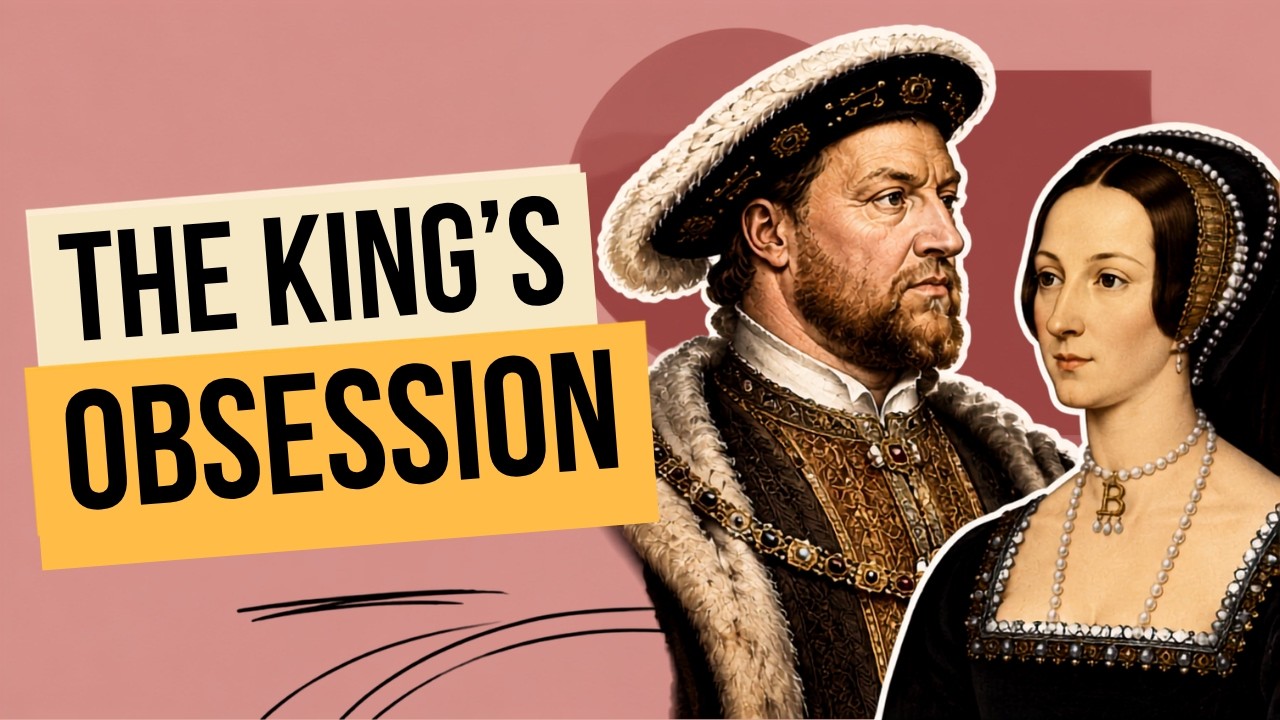
In the early 1520s, King Henry VIII of England - one of the most powerful rulers in Europe - was rejected. Not by a foreign monarch or a rival general, but by a young woman at his own court.
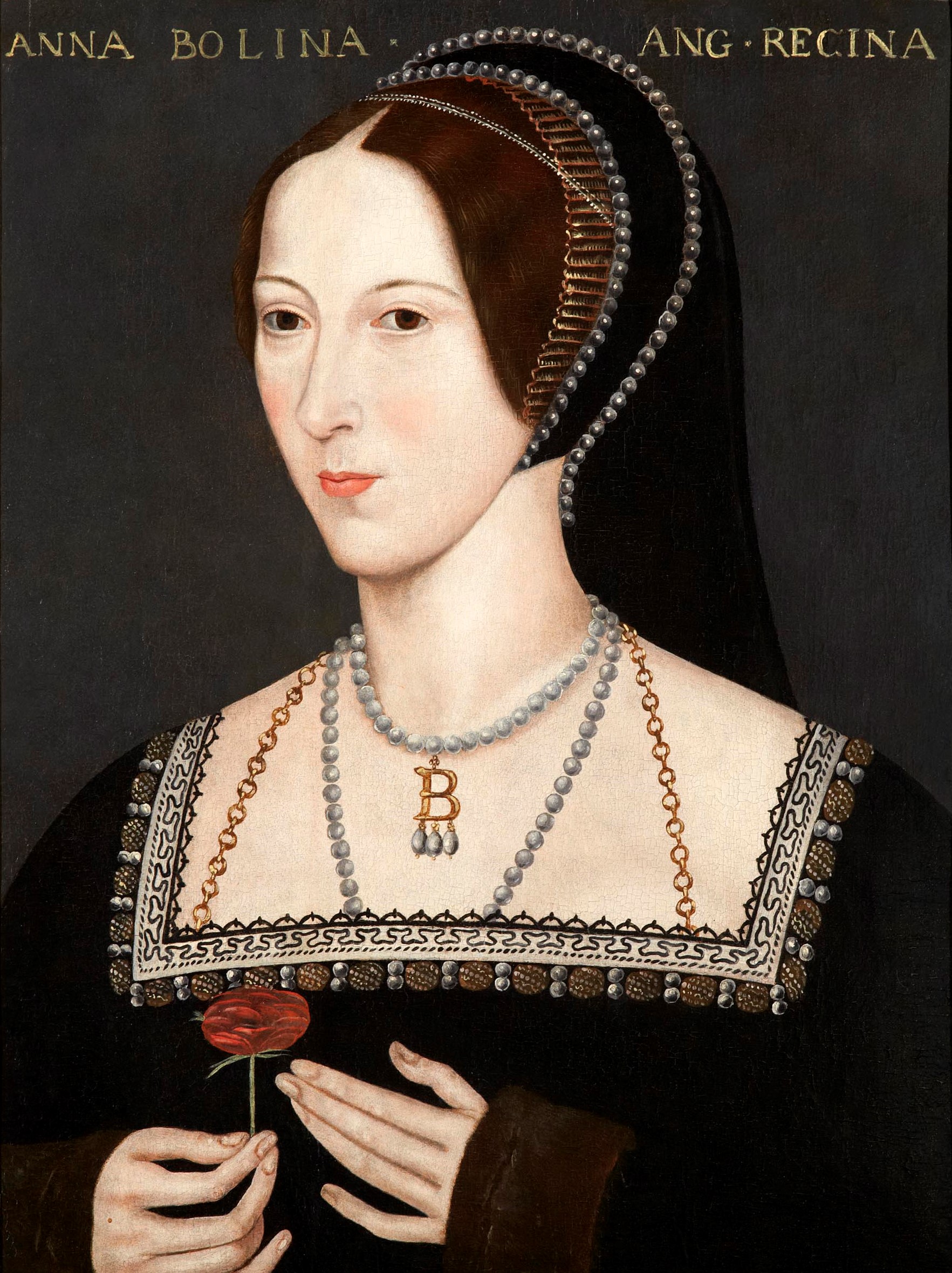
Anne Boleyn, the daughter of a ambitious English diplomat, had spent her formative years at the French court. When Henry began pursuing her, she declined the one role his court women typically accepted without question: mistress. She would accept nothing less than marriage.
For most women of the era, refusing a king's advances was unthinkable. For Anne, it was a calculated and courageous position. And it worked.
The consequences of that refusal rippled outward far beyond any bedroom or royal court. They cracked England's relationship with Rome, created an entirely new national church, and ultimately produced Elizabeth I - the monarch who would define an age.
Historical Background
By the time Henry VIII turned his attention to Anne Boleyn, he had been married to Catherine of Aragon for well over a decade. The marriage had produced one surviving child, a daughter named Mary. For Henry, this was a crisis.
The Tudor dynasty was young and fragile. Henry's father, Henry VII, had clawed the crown from a battlefield and spent his reign cementing a precarious peace. A male heir was not merely a personal desire for Henry VIII - it felt like a political and dynastic necessity. Catherine, older than Henry and worn down by multiple pregnancies that had ended in loss, seemed unlikely to provide one.
Henry had taken mistresses before. It was standard behavior for European monarchs, broadly understood and rarely scandalous. His relationship with Mary Boleyn, Anne's older sister, had been exactly this kind of arrangement - quiet, temporary, and politically inconsequential.
Anne was different.
Anne's Education and Formation
Anne Boleyn had spent several years at the court of France, likely in the household of Queen Claude, wife of Francis I. The French court in this period was a place of genuine intellectual and artistic vitality. It was also far more sophisticated in its expectations of women than the English court.
Anne returned to England with fluent French, polished courtly manners, a sharp wit, and a confidence that was unusual for a woman of her position. She could sing, dance, and debate theology. She had opinions and expressed them. Contemporary accounts describe her dark eyes as particularly striking, and her personality as magnetic - though not universally beloved. She made enemies as easily as she made admirers.
When Henry noticed her, he encountered something he was apparently unaccustomed to: a woman who engaged him intellectually and then declined to simply give him what he wanted.
What Happened
Henry's pursuit of Anne began in earnest around 1526, though their acquaintance likely stretched back a few years earlier. He began writing her letters - seventeen of which survive today, preserved in the Vatican Library, of all places, almost certainly seized from Anne's belongings as evidence during a later investigation.
The letters are remarkable. Henry VIII was not a man accustomed to vulnerability, yet these notes read as genuinely lovelorn. In one, he writes that he has been "struck with the dart of love" for more than a year and still does not know whether Anne returns his feelings. He signs several of them with a heart enclosing their initials.
Anne's responses do not survive, but the arc of Henry's letters tells the story well enough. He moved from hesitant courtship to passionate declaration to urgent desperation over the course of months and years.
Anne's position remained consistent throughout: she would not be his mistress. If he wanted her, he would need to make her his queen.
The Break with Rome
Henry's solution was to seek an annulment of his marriage to Catherine of Aragon from Pope Clement VII. This was not an entirely unusual request for a monarch of his era - powerful men had managed to extricate themselves from inconvenient marriages before.
The problem was Catherine's nephew. Holy Roman Emperor Charles V had sacked Rome in 1527 and held enormous influence over the papacy. Pope Clement, caught between a powerful emperor whose aunt he could not humiliate and an English king whose request had some theological merit, stalled for years.
Henry grew impatient. With the counsel of Thomas Cromwell and the ideological cover provided by reformist thinkers, he began the legal and ecclesiastical process of separating the English church from Rome's authority. The Act of Supremacy in 1534 made Henry the Supreme Head of the Church of England.
Henry and Anne had already married in secret by January 1533. Their daughter Elizabeth was born in September of that year.
Why It Was Strange
What makes this story genuinely unusual is not the romance itself, but its extraordinary proportions.
A king of England restructuring the national church, breaking with a religious institution that had shaped European civilization for a millennium, and executing officials including his former Lord Chancellor (Thomas More) - all in pursuit of a marriage - has few parallels in history.
- The personal became the geopolitical. What began as a courtship ended with England permanently severed from the Catholic world.
- A woman's refusal carried more historical weight than most battles. Anne's insistence on marriage rather than a liaison proved to be one of the most consequential decisions made by any individual in Tudor England.
- The outcome was not what either of them planned. Henry wanted a son. Anne's pregnancy produced Elizabeth. The child Henry initially viewed as a disappointment would become Elizabeth I, arguably the greatest Tudor monarch of all.
There is also a dark coda to the story that is impossible to ignore. Anne Boleyn was executed in May 1536, three years after her marriage to Henry. She was accused of adultery, incest, and treason - charges that most historians today regard as fabricated. Henry married Jane Seymour eleven days after Anne's death.
The woman whose refusal had set history in motion was beheaded on Tower Green. She was almost certainly innocent of everything except the crime of no longer being useful to a king.
Historical Legacy
The legacy of Henry and Anne's relationship is, by almost any measure, enormous.
The Church of England exists because of it. The English Reformation - with all its consequences for British politics, culture, and identity over the following centuries - was accelerated and shaped by Henry's need for an annulment. Scholars debate how much genuine Protestant theology drove the break with Rome versus Henry's personal motives, but the personal catalyst is not seriously disputed.
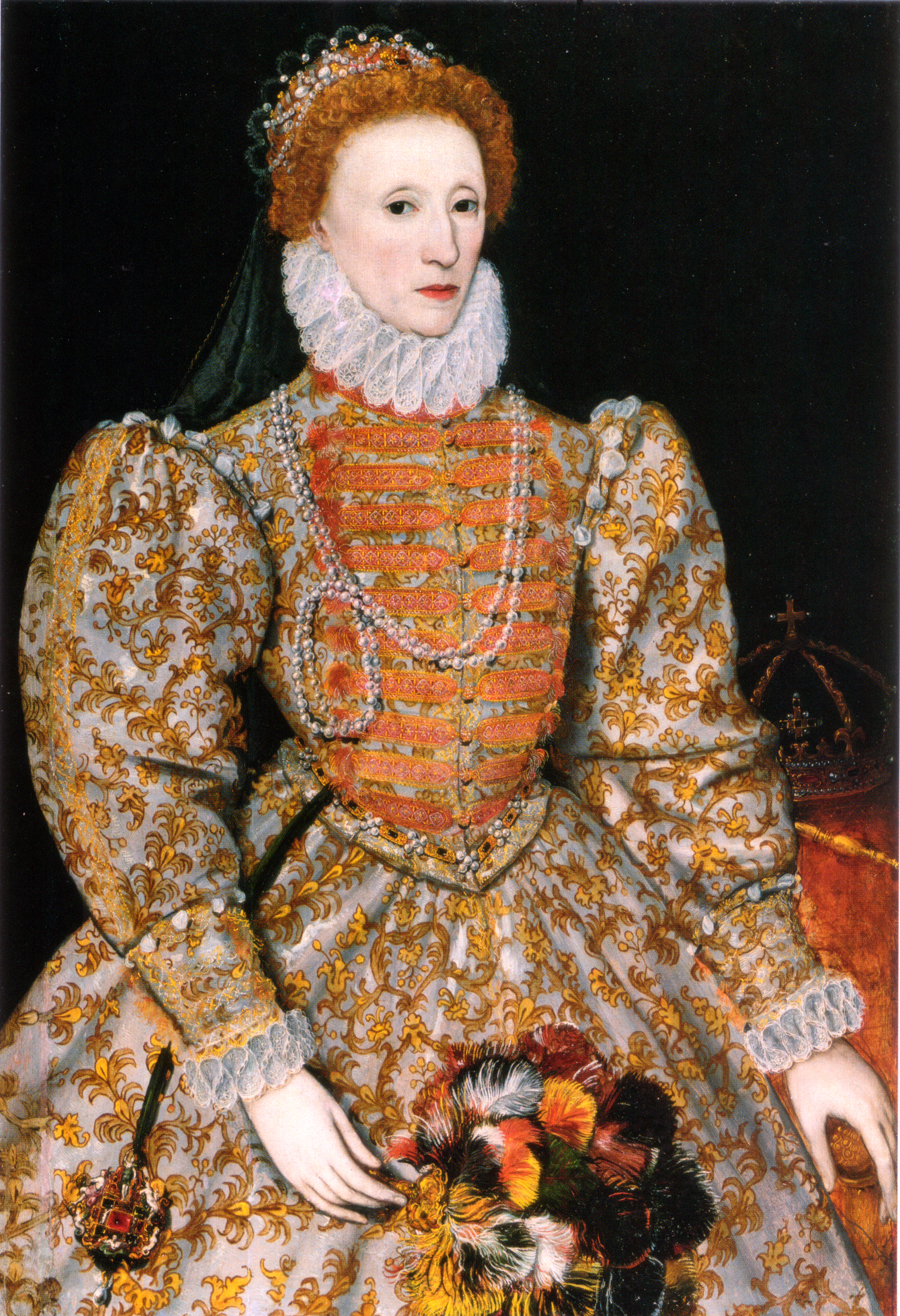
Elizabeth I, born of this union, reigned for 45 years and oversaw a period of English history so culturally rich that it still bears her name. The Elizabethan era produced Shakespeare, Marlowe, Francis Drake, and the foundations of English maritime and colonial power.
Anne Boleyn herself has become one of the most written-about figures in English history. She appears in countless novels, films, and television series. She is variously portrayed as a schemer, a victim, a proto-feminist, and a tragic heroine - often depending more on the era doing the portraying than on the historical record.
What the historical record does suggest is this: Anne Boleyn was an unusually well-educated, politically aware woman who understood the world she lived in and played its game with skill. She did not simply fall into Henry's orbit. She negotiated her position with clear eyes.
She could not, in the end, control what happened to her. No woman in Tudor England could fully do that. But for a period of roughly ten years, she shaped the course of English history more directly than almost anyone alive.
For a woman who held no army and no formal political office, that is a strange and extraordinary thing.
Sources
See below.

Written by
The History, But Strange Team
We dig into the weirdest, strangest, and most forgotten corners of real history. From bizarre royal scandals to unusual medical practices and darkly funny disasters, our team researches and writes about the stories your textbooks left out.