June 19, 2026· 7 min read
The Man Behind the Madness: King George III's Forgotten Suffering
He ruled the most powerful empire on earth, yet he could not govern his own mind — and the treatments meant to save him may have made everything worse.
Historical Figures

Strange Fact
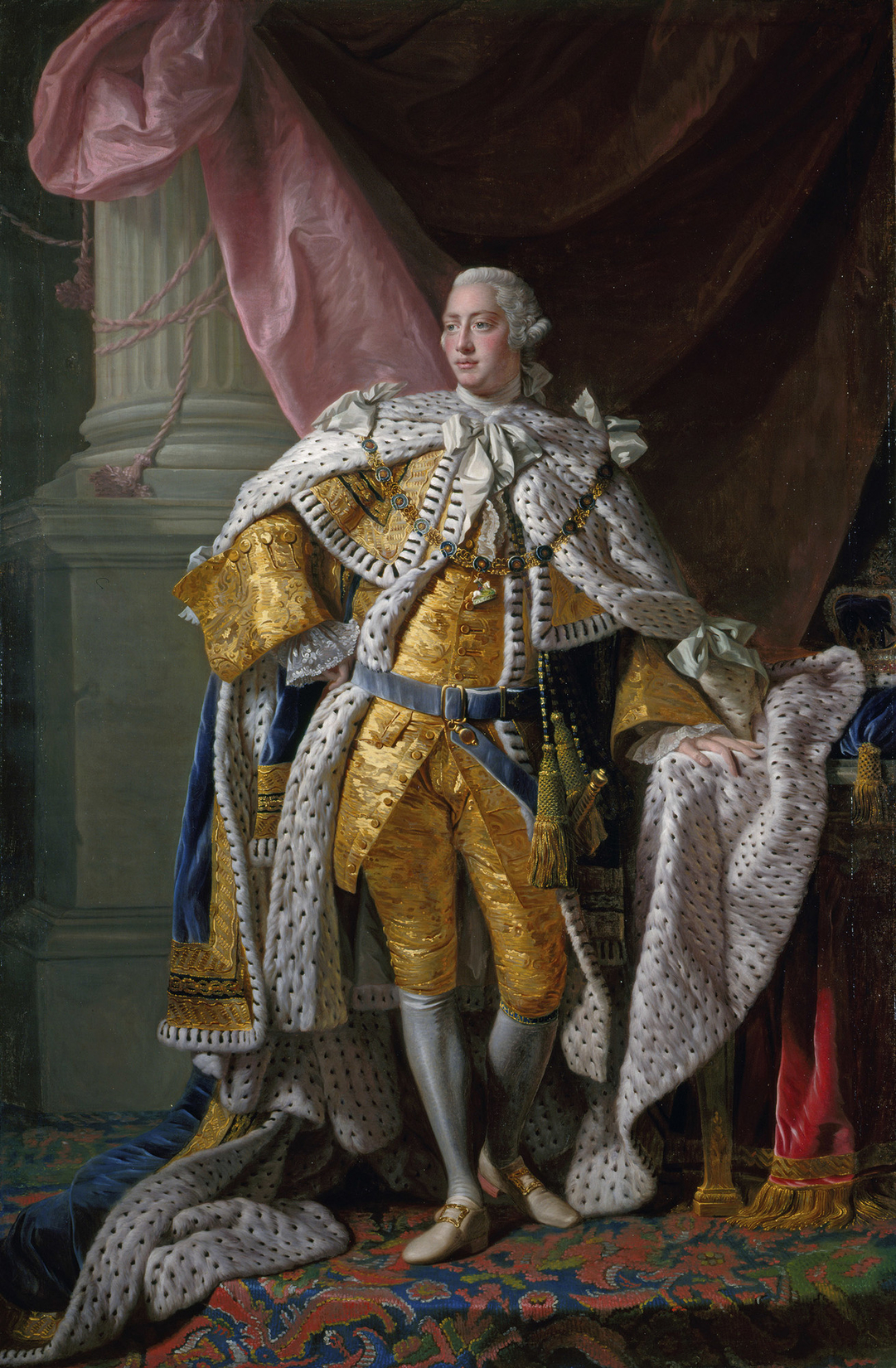
At the height of his illness, King George III once spoke continuously for 19 hours without stopping. By the end, his voice was raw, his mouth was foaming, and those around him could do little but watch. He was not raving in some dark dungeon. He was the King of Great Britain, inside a royal palace, and nobody knew how to help him.
This is not the story of a tyrant. It is the story of a man who suffered enormously, in public, under the weight of a crown and a condition that neither he nor anyone around him could understand.
Historical Background
George III came to the British throne in 1760 at the age of 22. By most accounts, he was earnest, deeply religious, and genuinely devoted to his duties as monarch. He was not the distant, imperious figure that later caricatures suggested. He loved farming, music, and his family. He fathered fifteen children with Queen Charlotte, and by all contemporary descriptions, he was a devoted husband.
His reign, however, was anything but peaceful. He oversaw the loss of the American colonies following the Revolutionary War, navigated the turbulent years of the French Revolution and the Napoleonic Wars, and presided over the early stirrings of the Industrial Revolution. For much of his reign, he remained a popular and engaged monarch.
But from at least 1788 onward, something began to unravel.
What Happened
The First Major Episode
In the autumn of 1788, George suffered his first widely documented mental crisis. He became agitated, confused, and at times incoherent. He spoke at extraordinary length and with alarming urgency, often on subjects that seemed disconnected or strange to those around him. During one reported incident, he is said to have attempted to shake hands with an oak tree, believing it to be the King of Prussia.
His physical symptoms were equally alarming. His urine was reported to have turned a dark, bluish-purple color, a detail that would become significant to later researchers. He experienced severe abdominal pain, rapid heartbeat, muscle weakness, and episodes of intense agitation followed by periods of apparent calm.
Those around him were frightened, and the government was destabilized. Parliament debated a Regency Bill, anticipating that the king might never recover. Then, in early 1789, he improved. He returned to public duties. The crisis passed, for a time.
The Treatments He Endured
What George endured at the hands of his physicians is difficult to read without discomfort. The leading doctor called in to manage his care was Francis Willis, a clergyman-turned-physician who ran a private asylum and believed firmly in physical restraint as a tool of treatment.
Willis and his colleagues employed methods that, by any modern standard, constituted serious harm:
- George was placed in a straitjacket during episodes of agitation, sometimes for hours at a time
- A gag was used to silence him when his talking was deemed excessive
- His legs were treated with caustic agents, blistering agents applied to the skin, based on the theory that drawing out fluids would relieve pressure in the brain
- He was confined to a specially constructed chair and restrained physically when he resisted treatment
These were not the practices of malicious men. They were the standard tools of 18th-century psychiatry, such as it was. Mental illness was poorly understood, treatment options were limited, and the theories underpinning care were rooted more in folk medicine and moral philosophy than in science.
None of that makes what George experienced any less harrowing.
Later Episodes and Final Decline
George continued to suffer recurring episodes throughout the 1790s and into the early 1800s. Each return of illness left him a little more diminished. By 1810, following the death of his youngest and beloved daughter Princess Amelia, he fell into a final, permanent breakdown from which he never recovered.
In his last decade, he lived in Windsor Castle, largely isolated from court life and from his family. He was blind, deaf, and deeply confused. He spoke to people who were not there and believed himself to be living in earlier times. His son, the future George IV, served as Prince Regent from 1811 onward.
George III died in January 1820, at the age of 81. He had been effectively absent from public life for nearly ten years.
Why It Was Strange
For most of the 20th century, historians and physicians assumed George suffered from some form of severe mental illness, possibly what we would now recognize as bipolar disorder. The "Mad King" label stuck, reinforcing a narrative that emphasized instability and incompetence.
Then, in 1969, two British psychiatrists, Ida Macalpine and Richard Hunter, put forward a different theory. After reviewing historical medical records in detail, they proposed that George had suffered from porphyria, a rare hereditary metabolic disorder that affects the nervous system.
Porphyria can cause a range of symptoms including abdominal pain, confusion, hallucinations, rapid heartbeat, muscle weakness, and crucially, discolored urine. It matched the historical record in striking ways.
Later research added another layer. A 2005 study analyzing samples of George's hair found elevated levels of arsenic, many times higher than normal. Arsenic was present in several compounds used as medicines at the time, including antimony and James's Powder. Some researchers have argued that the treatments George received may have actively triggered or worsened his porphyria attacks, meaning the very effort to cure him could have been making him sicker.
The porphyria theory is not universally accepted. Some historians and clinicians favor a primary psychiatric diagnosis, and a 2010 study re-examining the evidence suggested the picture remains genuinely unclear. What the debate does confirm, however, is that the simple label of "madness" was always inadequate.
Historical Legacy
George III is still, in popular memory, most often defined by two things: losing America and losing his mind. Both framings flatten a more complicated reality.
His reign lasted 59 years, the third longest in British history. For most of that time, he was a functioning, engaged monarch. He was the first British king to study science formally, he supported the Royal Academy of Arts, and he oversaw Britain's emergence as the dominant global power of the early 19th century.
His mental illness was real and devastating. But it was also deeply shaped by the limits of the era in which he lived. There was no diagnosis available to him, no effective treatment, and no framework within which his suffering could be understood with any compassion. He was a patient failed by the medicine of his time.
The story of George III has taken on new relevance in an era when conversations about mental health have become far more open and nuanced. His case is now frequently cited in discussions of how societies have historically treated those with mental illness, and how stigma compounds suffering in ways that are often invisible until much later.
A man who ruled an empire could not access the most basic form of understanding: that he was ill, that it was not his fault, and that he deserved care rather than restraint.
That is, perhaps, the strangest and most sobering fact of all.
Sources
-
Peters, Timothy J., and D. Wilkinson. "King George III and Porphyria: A Clinical Re-examination of the Historical Evidence." History of Psychiatry, 2010. https://journals.sagepub.com/doi/10.1177/0957154X09102616
-
Macalpine, Ida, and Richard Hunter. George III and the Mad Business. Allen Lane, 1969.
-
Cox, T.M., et al. "King George III and Porphyria: An Elemental Hypothesis and Investigation." The Lancet, 2005. https://www.thelancet.com/journals/lancet/article/PIIS0140-6736(05)67743-6/fulltext
-
Roberts, Andrew. "George III: The Man Who Loved America." BBC History Magazine, 2019. https://www.historyextra.com/period/georgian/george-iii-mad-king-mental-health/
-
Brooke, John. King George III. Constable, 1972.
-
Hibbert, Christopher. George III: A Personal History. Viking, 1998.
-
Smithsonian Magazine. "Was King George III Really Mad?" https://www.smithsonianmag.com/history/was-george-iii-really-mad-180967598/

Written by
The History, But Strange Team
We dig into the weirdest, strangest, and most forgotten corners of real history. From bizarre royal scandals to unusual medical practices and darkly funny disasters, our team researches and writes about the stories your textbooks left out.