June 19, 2026· 6 min read
The Queen Mother Who Wouldn't Let the King of France Sleep With His Wife
When Louis IX of France married Margaret of Provence in 1234, his mother Blanche of Castile refused to let the newlyweds be alone — and she had the guards to prove it.
Historical Figures
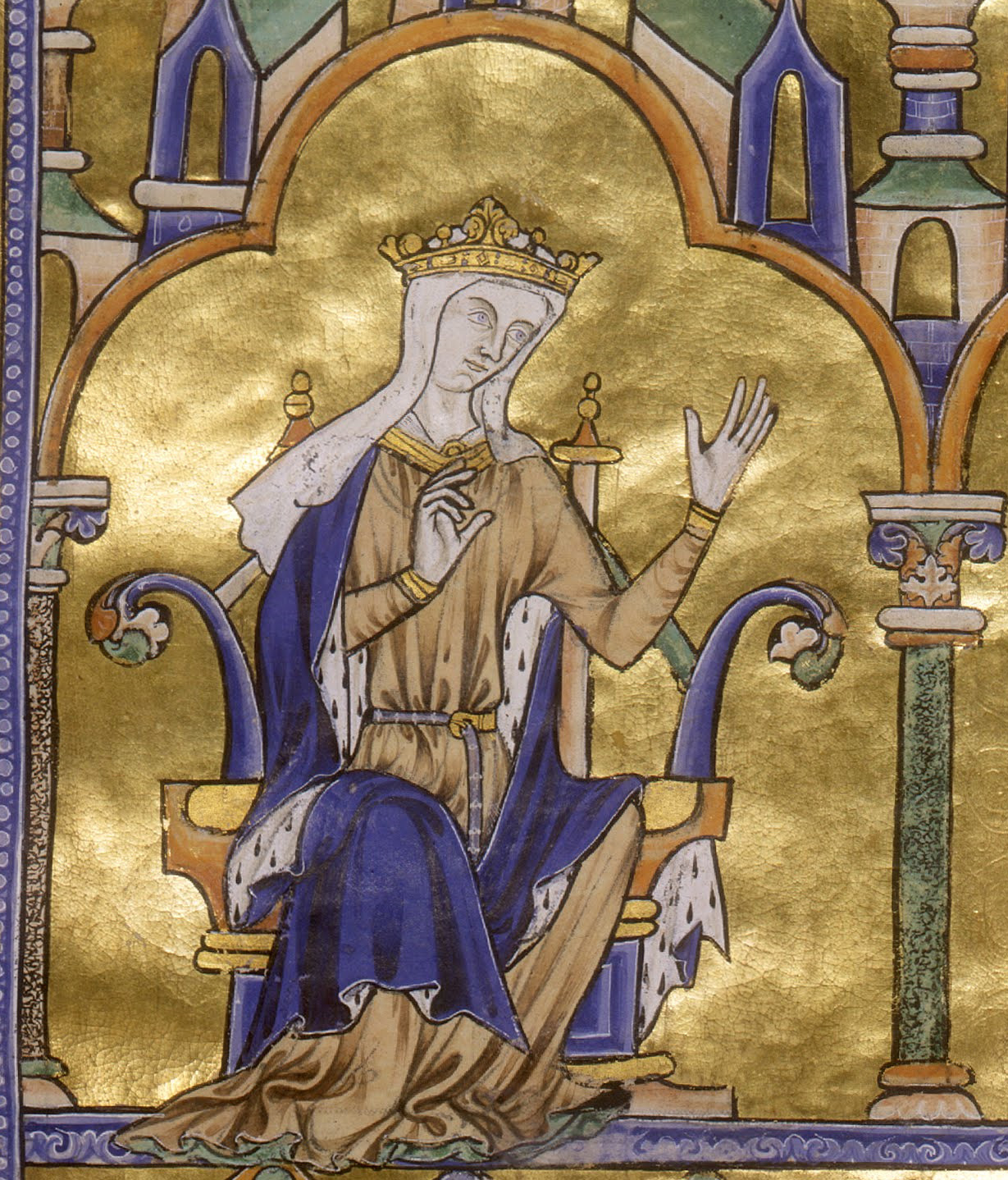


Historical Illustration (AI-generated)
Strange Fact
In May 1234, the King of France was twenty years old, freshly married, and — by every measure — one of the most powerful men in Europe. He commanded armies, dispensed justice, and ruled over millions of subjects.
He could not, however, get his mother to leave him alone.
Blanche of Castile, regent, queen, and arguably the shrewdest political mind in thirteenth-century France, reportedly stationed guards outside the royal chambers to prevent her son, King Louis IX, from spending unsupervised time with his new wife, Margaret of Provence. According to contemporary accounts, the young couple was reduced to sneaking through their own palace corridors in search of privacy.
Louis IX would go on to be canonized as a saint. His mother, it seems, was determined to make him earn it.
Historical Background
Blanche of Castile was not a woman who did things by half measures. Born in 1188, a granddaughter of Eleanor of Aquitaine, she had been dispatched to France as a child bride and spent decades navigating the treacherous politics of the Capetian court. When her husband, Louis VIII, died in 1226, he left her as regent over a kingdom riddled with rebellious barons and a nine-year-old king.
She handled it.
Over the next decade, Blanche crushed two major noble revolts, managed ongoing tensions from the Albigensian Crusade in the south, and maintained the French crown's authority with a firmness that surprised — and occasionally alarmed — her contemporaries. Medieval chroniclers, not always generous to powerful women, could not quite decide whether to admire her or be unsettled by her.
By the time Louis came of age and took the reins of government himself around 1234, Blanche had spent the better part of a decade as the effective ruler of France. Letting go was not something that came naturally to her.
Louis IX, for his part, was genuinely devoted to his mother. He described her as the person he loved most on earth — a sentiment that, given the circumstances of his marriage, must have been tested on a regular basis.
What Happened
On May 27, 1234, Louis IX married Margaret of Provence at the Cathedral of Saint-Trophime in Sens. Margaret was around thirteen years old, cultured, intelligent, and by later accounts, deeply in love with her husband. Louis appears to have returned the feeling.
Blanche of Castile did not share their enthusiasm.
The primary source for what followed is the chronicle of John of Joinville, Louis's friend, biographer, and one of the most reliable witnesses to his reign. Joinville describes Blanche's behavior toward the royal marriage with barely concealed astonishment. The queen mother, he writes, made every effort to ensure the couple spent as little time together as possible. She positioned herself — and her attendants — to intercept Louis whenever he attempted to visit Margaret's chambers at unusual hours.
The young king and queen developed what can only be described as a system. They arranged for lookouts among their own servants. When Blanche was spotted approaching, Louis would retreat before she arrived. If he was caught in the corridor, he would pretend to be simply passing through.
On at least one occasion, Joinville recounts, Blanche arrived to find the couple together. Louis left immediately. Margaret, left behind, reportedly burst into tears — whether from frustration, embarrassment, or the sheer indignity of the situation is not recorded.
This was not a brief episode of maternal over-involvement. The pattern continued for years. When Margaret was heavily pregnant and fell dangerously ill, Blanche arrived at her bedside — and Louis, apparently conditioned by years of these encounters, instinctively made to leave. It took Margaret physically clinging to his arm and crying out "Whether I live or die, you will not let me see you" to make him stay.
The fact that this scene was considered remarkable enough to record tells you something about how normal his departures had become.
Why It Was Strange
Medieval royal marriages were political instruments. Warmth between husband and wife was a bonus, not an expectation. Mothers-in-law interfering in royal households was hardly unknown.
But Blanche's behavior went considerably beyond interference.
Louis IX was not a crown prince awaiting his turn. He was the reigning King of France — anointed, crowned, in full exercise of his royal authority. He led armies and went on Crusade. He reformed the French legal system. He negotiated with popes. And yet, within the domestic sphere of his own household, he appears to have been genuinely unable — or unwilling — to override his mother's wishes.
This raises a question that Joinville's chronicle never quite answers: was Louis a victim of Blanche's possessiveness, or was he, on some level, complicit in it?
His devotion to his mother was sincere and lifelong. When Blanche died in 1252, while Louis was on Crusade in the Holy Land, he wept openly — behavior that his crusading companions apparently found excessive even by the emotional standards of the age. He had arranged for her to govern France in his absence, trusting her above everyone else.
The relationship between them was not one of a controlling parent and a resentful child. It was something stranger and more mutual than that — a bond so close that it functioned almost as a parallel marriage, with Margaret permanently in third place.
For Margaret herself, the situation was a source of lasting unhappiness. Later in life, she told Joinville that she had made a deliberate resolution never to ask Louis for a favor while Blanche was alive, because she knew that whatever Blanche opposed, Louis would ultimately decline. She worked around her mother-in-law rather than through her husband. That adaptation speaks to how clearly she understood the hierarchy.
Historical Legacy
Louis IX was canonized in 1297, less than three decades after his death — one of the fastest canonizations of a medieval monarch on record. His reputation for justice, piety, and personal holiness was remarkable enough that even his political enemies acknowledged it.
Blanche of Castile is remembered as one of the most capable regents of the medieval period, and one of the most formidable women in French history. Historians have reassessed her reputation over the centuries — the chroniclers who called her "a she-wolf" and a foreign interloper have given way to scholars who recognize her genuine political skill and the near-impossible situation she managed after her husband's death.
The marriage of Louis and Margaret, despite everything, produced eleven children and appears to have been, by medieval royal standards, a genuinely affectionate one. Margaret outlived Louis by nearly thirty years, surviving until 1295.
What the episode reveals, more than anything, is how medieval power actually worked — not as a clean hierarchy of command, but as a web of personal relationships, emotional obligations, and competing loyalties. A king who could call a Crusade could not easily tell his mother to mind her own business. A queen consort with no political office could shape the emotional landscape of an entire reign.
Blanche of Castile, in other words, understood something that the formal structures of power did not capture: that the person who controls access controls everything.
She was not wrong. She was just, by most accounts, very difficult to live with.
Sources
- Blanche of Castile — Wikipedia
- Margaret of Provence — Wikipedia
- Joinville, Jean de. Life of Saint Louis (c. 1309). Translated by Caroline Smith, Penguin Classics, 2008.
- Pernoud, Régine. Blanche of Castile. Translated by Henry Noel, Collins, 1975.

Written by
The History, But Strange Team
We dig into the weirdest, strangest, and most forgotten corners of real history. From bizarre royal scandals to unusual medical practices and darkly funny disasters, our team researches and writes about the stories your textbooks left out.


