June 20, 2026· 7 min read
The Queen Who Had Everything Except a Mirror
Elizabeth I built one of history's most elaborate royal wardrobes, then spent her final years making sure she never had to look at herself wearing it.
Historical Figures

Strange Fact
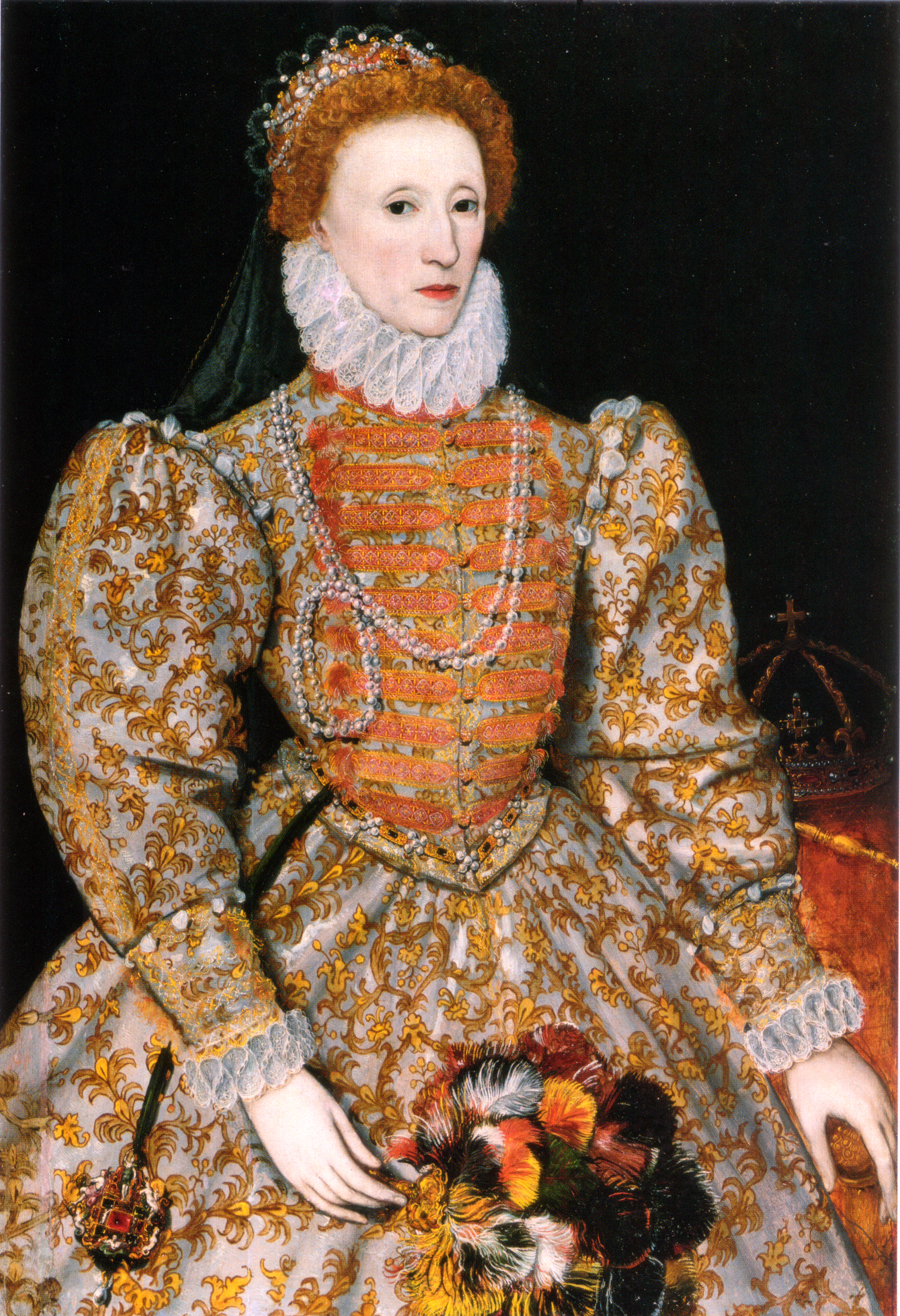
By the time Elizabeth I died in 1603, her wardrobe contained roughly 2,000 dresses, at least 80 wigs, and by some accounts as many as 150 hairpieces. She owned more clothing than most European monarchs combined. Her portraits were carefully stage-managed. Her image was, in every meaningful sense, a political instrument.
And yet, in her final years, she reportedly had every mirror removed from her private rooms.
Courtiers were forbidden from commenting on her appearance. Portraits showing her age were suppressed. The woman who had arguably invented the concept of royal branding spent the last chapter of her life dismantling the one thing her brand depended on: the ability to look.
Historical Background
Elizabeth I came to the throne in 1558, inheriting a kingdom fractured by religious conflict and dynastic instability. She was twenty-five years old, red-haired, pale-skinned, and acutely aware that her appearance carried political weight. In the sixteenth century, a monarch's body was understood as a symbol of the realm. Beauty signaled divine favor. Physical decay suggested weakness.
From early in her reign, Elizabeth worked to control how she was seen.
Her portraits were not casual likenesses. They were official documents. The 1563 "Sieve Portrait" template, for example, was circulated as a kind of approved image, and painters who deviated too far from the sanctioned version risked royal displeasure. By the 1590s, the Privy Council was actively attempting to regulate portraits of the queen, ordering that unflattering images be destroyed.
This was not mere vanity. It was state policy.
The clothing, too, served a purpose beyond fashion. Elizabeth's gowns were loaded with symbolic imagery: serpents for wisdom, eyes and ears for vigilance, flowers for virtue. Each outfit was a visual argument for her fitness to rule. The 2,000 dresses were not a shopping habit. They were a communications strategy.
What Happened
The physical reality of Elizabeth's later years stood in sharp contrast to the image her court was working so hard to project.
By the 1590s, she had lost most of her teeth, which caused her cheeks to hollow visibly. Contemporaries noted that her speech became difficult to understand. Her hair had thinned significantly, possibly from a bout of smallpox in 1562 that she survived but that left lasting effects. The wigs, which she had worn for decades as fashion accessories, became necessities.
Her skincare routine made things worse. Like many aristocratic women of her era, Elizabeth used ceruse, a cosmetic made from white lead and vinegar, to achieve the pale complexion fashionable at court. Applied regularly over decades, ceruse caused the skin to thin and discolor, and led to hair loss along the hairline. The cure, in other words, accelerated the very aging it was meant to conceal.
The portraits from this period show none of this. The "Ditchley Portrait" (c. 1592) and the "Rainbow Portrait" (c. 1600-1602) depict a timeless, ageless figure, smooth-skinned and commanding, bearing almost no relationship to the woman described in private correspondence by foreign ambassadors.
André Hurault de Maisse, the French ambassador who visited Elizabeth in 1597, left one of the most candid contemporary accounts. He described a woman with blackened teeth, thin white hair visible beneath a wig of auburn curls, and a low-cut dress that exposed a chest deeply lined with age. He noted she seemed to be watching him, alert to whether he would acknowledge what he saw.
He was careful not to.
This, it appears, was the expected behavior. The removal of mirrors from the royal apartments fit into a broader system of enforced illusion. Courtiers who acknowledged the queen's physical decline risked not just social ruin but, in an environment where speech could be construed as sedition, something considerably worse. The aging body of the monarch was, politically speaking, unspeakable.
The exact date at which mirrors were removed is not documented with precision. What is clear from multiple accounts is that by her final years, Elizabeth had created an environment in which her own reflection was effectively censored.
Why It Was Strange
The strangeness here is not simply psychological, though the psychology is interesting enough. It is structural.
Elizabeth had spent forty years building one of the most sophisticated image-management operations in European history. She understood, perhaps better than any ruler of her time, that perception was power. The portraits, the dresses, the wigs, the carefully rehearsed public appearances, all of it was designed to project a specific idea of queenship: eternal, virginal, divine.
And then, having built this machine, she turned it inward.
The same impulse that produced 2,000 dresses also produced the mirrorless rooms. Both were attempts to control the image. The difference is that one was a performance for the public and the other was a performance for herself, or rather, a refusal to perform even privately. She did not remove the mirrors because she had stopped caring about her appearance. She removed them, it seems, because she could not reconcile what she would have seen with what she needed to believe.
There is also something worth noting about power and vulnerability. Elizabeth never married. She never named a successor until she was dying. Both decisions are usually explained in political terms, and they were political. But they also meant that she never allowed anyone a position from which they could formally observe her decline and plan around it. The mirrorless rooms fit the same pattern. You cannot plan for a queen's death if you are not permitted to notice that she is aging.
The court, in a very literal sense, was required to maintain the fiction alongside her.
Historical Legacy
Elizabeth I died on March 24, 1603, at Richmond Palace. She was sixty-nine years old. Contemporary accounts suggest she spent her final days largely silent, sitting on cushions on the floor, unwilling or unable to move to a bed. When she finally agreed to lie down, she did not rise again.
The image machinery outlasted her. The "Mask of Youth," as historians have come to call the frozen, ageless face that appears in her later official portraits, continued to circulate long after her death. It became the template through which future generations imagined her.
In a practical sense, it worked. Ask most people today to picture Elizabeth I and they will describe something close to those late portraits: the white face, the red wig, the elaborate ruff. The actual woman described by Ambassador de Maisse, frail and watchful behind blackened teeth, is not the Elizabeth who survived.
Her approach to image control was, in its way, centuries ahead of its time. The idea that a public figure's carefully curated image might diverge radically from private reality is not a modern invention. Elizabeth's court demonstrated it with extraordinary thoroughness.
What makes the mirrors strange is what they reveal about the cost. The most image-conscious monarch in English history spent her last years in rooms stripped of every surface that might show her the truth. The 2,000 dresses remained. The wigs remained. The portraits kept aging her backward.
Only the mirrors were gone.
Sources

Written by
The History, But Strange Team
We dig into the weirdest, strangest, and most forgotten corners of real history. From bizarre royal scandals to unusual medical practices and darkly funny disasters, our team researches and writes about the stories your textbooks left out.