June 19, 2026· 7 min read
The Princess Too Inbred to Escape: Maria Antonia and the Hidden Cost of the Habsburg Crown
She dodged the infamous Habsburg jaw, but Maria Antonia could not escape the deeper consequences of a dynasty that had been marrying itself into extinction for generations.

Strange Fact
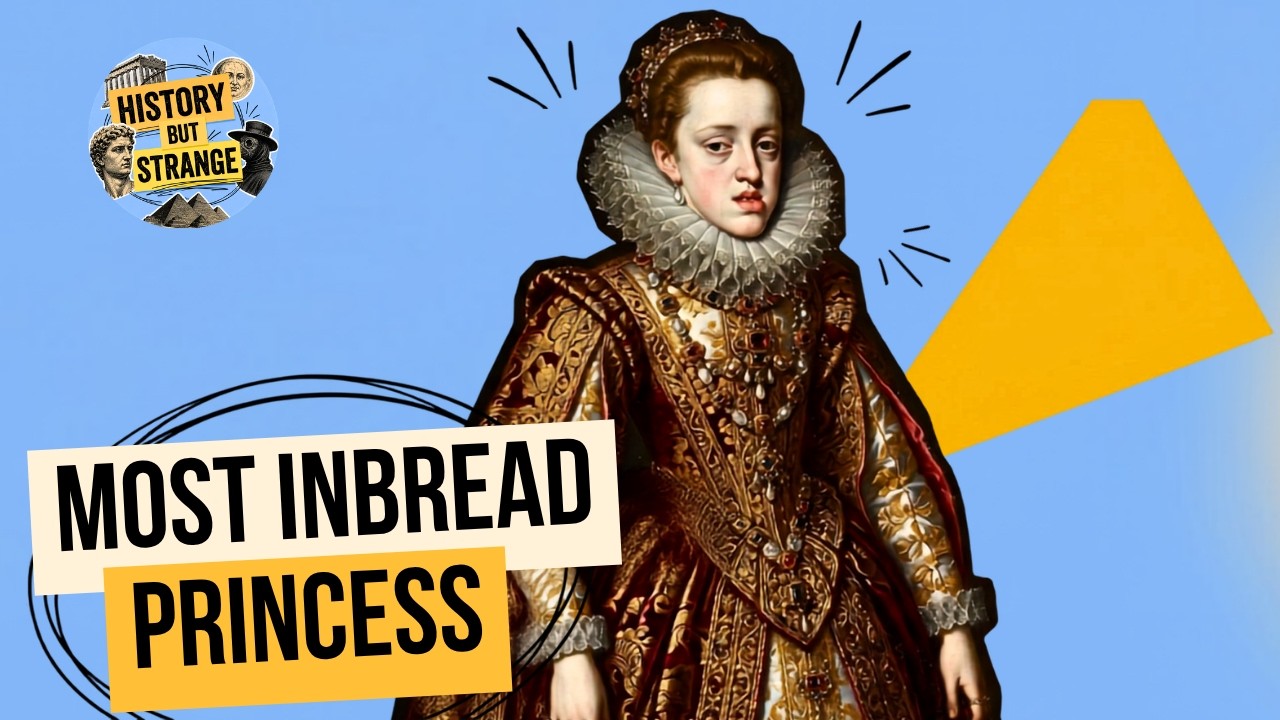
Maria Antonia of Austria was born in 1755 with an inbreeding coefficient exceeding 30 percent. To put that number in context: the coefficient for children born to full siblings typically sits around 25 percent. Maria Antonia's parents were, in genetic terms, closer to each other than two people who shared both a mother and a father.
This was not an accident of nature. It was the accumulated result of deliberate dynastic policy, stretched across generations, in which the Habsburg family had repeatedly married cousins, aunts, and nieces in the name of keeping power within the bloodline.
The result was a young woman whose body and life bore the weight of centuries of calculated royal strategy.
Historical Background
The Habsburgs were, for roughly five hundred years, the most powerful royal family in Europe. At their peak, they controlled Spain, Austria, the Holy Roman Empire, and vast colonial holdings across the Americas and Asia. Their reach was extraordinary. So was their commitment to keeping that reach within the family.
The logic of dynastic marriage was simple: alliances forged through bloodlines were considered more reliable than those struck by treaty alone. A bride or groom represented a living, breathing diplomatic bond. Over time, however, this strategy folded the Habsburg family tree back on itself so many times that it became less a tree and more a tangled knot.
Charles II of Spain, who died in 1700, is the most frequently cited example of Habsburg inbreeding at its most extreme. He could not chew properly, suffered persistent illness throughout his life, and died without an heir at the age of 38. His inbreeding coefficient was approximately 25 percent, lower than Maria Antonia's.
By the mid-eighteenth century, the Austrian branch of the Habsburgs had not learned to recalibrate. Maria Antonia was born into that same genetic inheritance, in a court that still valued political convenience over biological caution.
What Happened
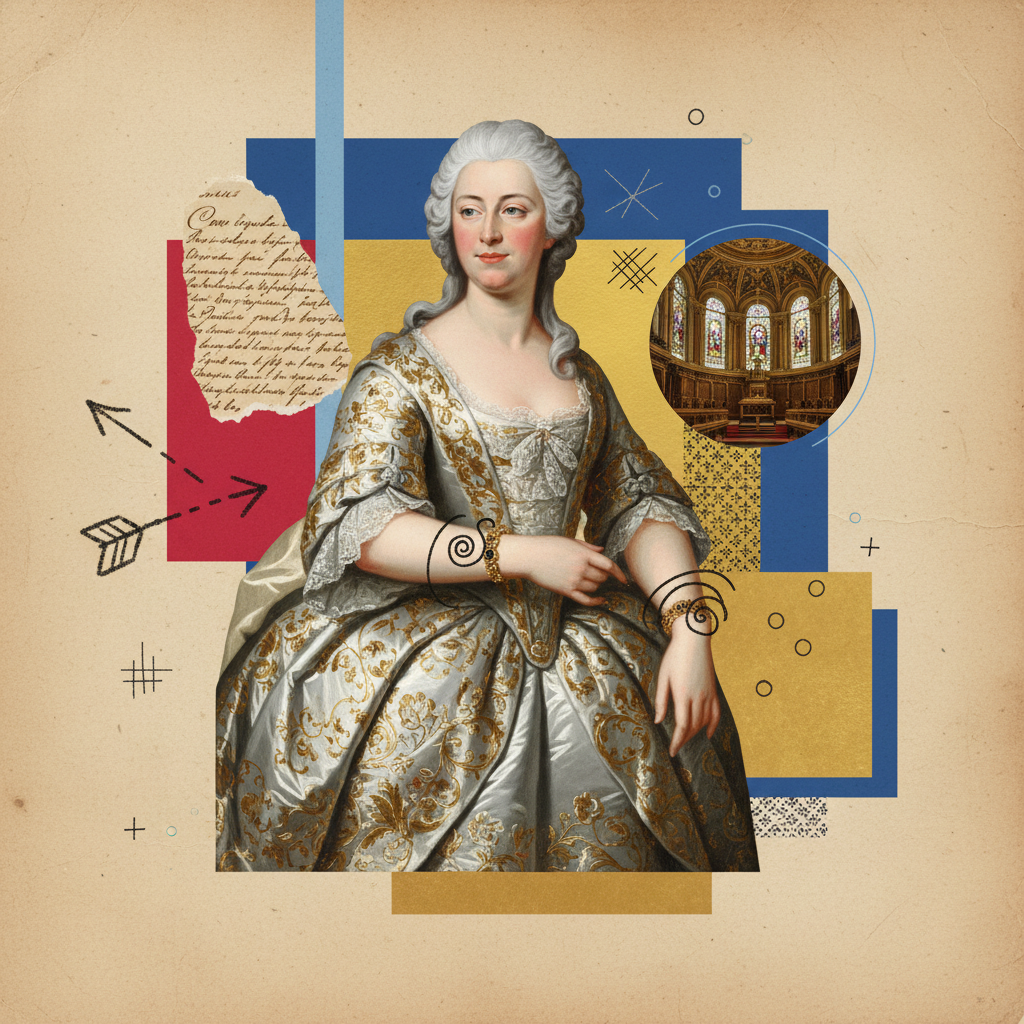
Maria Antonia was born on November 2, 1755, the fifteenth child of Holy Roman Emperor Francis I and Empress Maria Theresa. She entered the world into one of the most powerful households in Europe, surrounded by siblings, courtiers, and the machinery of imperial expectation.
Despite her high inbreeding coefficient, Maria Antonia did not display the most visible marker of Habsburg genetic strain: the prominent, protruding lower jaw that had become almost a symbol of the dynasty's self-inflicted decline. She was, by the standards of her time and family, considered healthy and marriageable.
And so she was married off.
At fourteen years old, Maria Antonia was sent to France to wed the heir to the French throne, the future Louis XVI. The marriage was arranged to shore up the Franco-Austrian alliance, a diplomatic priority that had nothing to do with the preferences or wellbeing of a teenage girl. She crossed the border into France in a ceremony that, by tradition, required her to leave behind every possession she had brought from Austria, including her clothes, her dog, and the people she knew. She entered France as a blank slate, a political instrument dressed in French fashion.
She adopted a French form of her name: Marie Antoinette.
What followed is a story most readers will know in broad outline. Marie Antoinette became Queen of France, struggled to produce an heir for years (a difficulty historians have attributed in part to Louis XVI's own health issues), and found herself the target of mounting public hostility as France lurched toward financial crisis and revolution.
She was caricatured as extravagant and indifferent, a foreign queen spending French money while French people starved. The reality was more complicated. She did spend lavishly, particularly in her early years at Versailles. She also made genuine efforts to adapt to French culture, to learn the court's expectations, and later to support her family during the escalating crisis of the Revolution.
None of it was enough. In 1793, Marie Antoinette was executed by guillotine at the age of 37.
The Genetics Behind the Story
Maria Antonia's story is often folded into the broader narrative of Marie Antoinette, the French queen. But the Habsburg dimension is worth examining separately, because it shaped her before France ever had the chance to.
Researchers who have studied the Habsburg dynasty's collapse have pointed to inbreeding as a central factor in the dynasty's inability to sustain healthy heirs. A landmark 2019 study published in the Annals of Human Biology analyzed the facial deformities associated with the Habsburg jaw and linked them directly to the degree of inbreeding across generations. Separate research published in PLOS ONE found a clear statistical relationship between inbreeding coefficients and the failure of the Spanish Habsburg line to produce surviving children.
For Maria Antonia, the physical consequences of her genetic inheritance may have been less visible than those of Charles II, but the psychological and physiological pressures of her upbringing were real. She grew up in a vast imperial court where children were assessed primarily as future diplomatic assets. Her education was functional rather than enriching. Her emotional development took place in the shadow of an institution that treated people as variables in a political equation.
Why It Was Strange
What makes Maria Antonia's story strange, in the particular way that history sometimes produces strangeness, is the gap between what she represented and what she was.
To the Habsburg court, she was a diplomatic instrument, one piece in a long game of continental power. To the French public, she became a symbol of royal excess and foreign intrusion. To posterity, she is Marie Antoinette, one of history's most recognizable figures, the subject of films, novels, and endless fascination.
But she was also a person born into a genetic situation that no one at the time had the vocabulary to understand or the will to prevent. The science of heredity did not exist in any meaningful form in 1755. The Habsburgs did not know, in the way we now know, what centuries of cousin marriages were doing to their descendants. What they did know, on some level, was that their heirs kept dying young, kept failing to reproduce, kept presenting with unexplained illnesses. They continued anyway.
The strangeness is not just biological. It is the strangeness of a system so committed to its own perpetuation that it engineered the conditions for its own destruction, one carefully arranged marriage at a time.
- Her inbreeding coefficient exceeded that of children born to full siblings
- She was sent to a foreign country at fourteen as a political offering
- She was stripped of all her possessions at the French border as part of the diplomatic ritual
- She became one of history's most famous queens while remaining, in many ways, a stranger in her own life
- She was executed before her thirty-eighth birthday
Historical Legacy
The Habsburg dynasty formally ended as a ruling power in 1918, when the Austro-Hungarian Empire collapsed following the First World War. By that point, the family had spent the better part of two centuries slowly unraveling, genetically and politically.
Maria Antonia's story sits near the middle of that unraveling. She is remembered primarily as Marie Antoinette, a French queen, a revolutionary villain, a fashion icon, a tragic figure. The Habsburg context, the inbreeding coefficient, the political machinery that produced her, tends to get lost in the drama of the Revolution.
But that context matters. It explains why a fourteen-year-old girl was shipped across a border to marry a stranger. It explains the culture of dynastic convenience that shaped every decision made about her life before she was old enough to make decisions herself. And it points to a broader pattern: royal inbreeding was not merely a curiosity or a medical footnote. It was a structural feature of European power that carried genuine human costs, paid by the people born into it.
Maria Antonia paid one of the highest prices. She arrived in the world with the genetic legacy of a dynasty already in decline, was handed to a foreign court as a teenager, and spent her adult life navigating a political crisis that was, in ways she could not have seen, the direct consequence of the same aristocratic systems that had produced her.
History has given her back her French name. The Habsburg story is worth remembering too.
Sources
- "The Distinctive Habsburg Jaw Was Likely the Result of Inbreeding" — Smithsonian Magazine. https://www.smithsonianmag.com/smart-news/distinctive-habsburg-jaw-was-likely-result-inbreeding-180973688/
- "The Role of Inbreeding in the Extinction of a European Royal Dynasty" — PLOS ONE. https://journals.plos.org/plosone/article?id=10.1371/journal.pone.0005174
- "Archduchess Maria Antonia of Austria" — Wikipedia. https://en.wikipedia.org/wiki/Archduchess_Maria_Antonia_of_Austria
- "How Inbreeding Killed Off the Habsburg Dynasty" — National Geographic. https://www.nationalgeographic.com/science/article/habsburg-jaw-inbreeding-genetics
- "Habsburg Dynasty: European Family" — Encyclopaedia Britannica. https://www.britannica.com/topic/Habsburg-dynasty

Written by
The History, But Strange Team
We dig into the weirdest, strangest, and most forgotten corners of real history. From bizarre royal scandals to unusual medical practices and darkly funny disasters, our team researches and writes about the stories your textbooks left out.