June 18, 2026· 7 min read
The Court That Cut Off Ears: How England Finally Abolished the Star Chamber
For over 150 years, the Court of Star Chamber operated in secret, without juries, and with a fondness for mutilation — until Parliament put an end to it on June 19, 1641.

Strange Fact
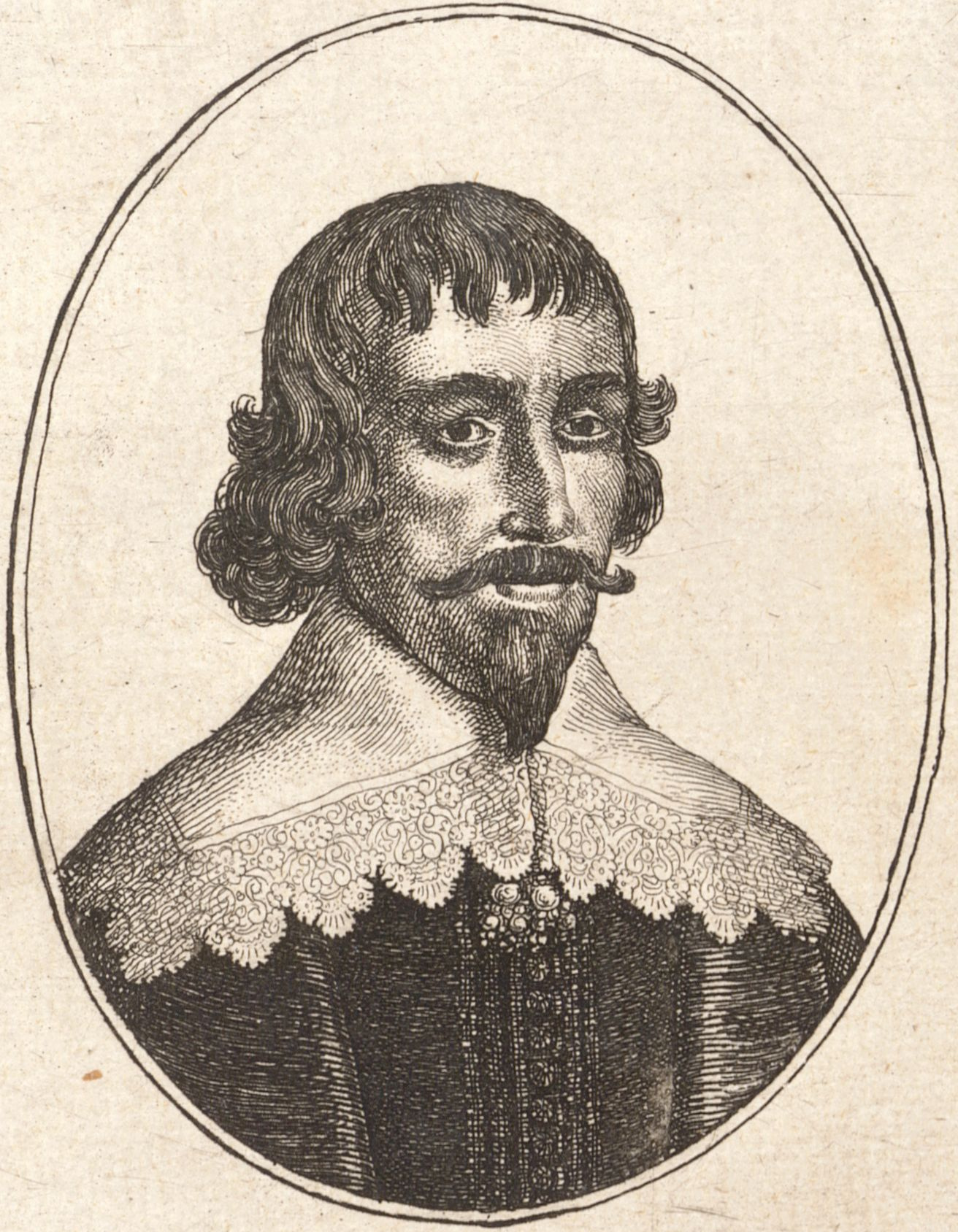
When Puritan pamphleteer William Prynne was hauled before the Court of Star Chamber in 1634, he was sentenced to life imprisonment, a ruinous fine, and the removal of both his ears. The ears were cropped in public at the pillory.
That alone would be remarkable enough. But Prynne was brought before the Star Chamber again in 1637 — this time for continuing to write from prison. The judges ordered what remained of his ears to be cut off a second time. They also had his cheeks branded with the letters S.L., standing for Seditious Libeller.
Prynne, characteristically, claimed the initials stood for Stigmata Laudis — marks of praise. He refused to stop writing.
This was the Star Chamber. And on June 19, 1641, England's Parliament abolished it.
Historical Background
The Court of Star Chamber took its name from the decorated ceiling of the room in the Palace of Westminster where it met — a ceiling painted with golden stars on a blue ground. It had operated in various forms since at least the late fifteenth century, originally as a mechanism for the royal council to handle cases that ordinary courts could not, or would not, touch.
In its early years, the court had a reasonable reputation. It could act quickly, it was not easily bribed, and it was willing to take on powerful nobles whom local juries might fear to convict. For ordinary people with grievances against the powerful, it was sometimes genuinely useful.
But the court had a structural problem that would come to define it: it had no jury. Cases were decided by royal councillors and judges appointed by the Crown. There was no right of habeas corpus. Defendants could be — and routinely were — compelled to testify against themselves. Proceedings were largely secret. And the range of punishments available was limited only by the imagination of the judges, since the court was explicitly exempt from the restrictions that governed common law courts.
It could not impose the death penalty, which in practice meant it imposed almost everything else.
What Happened
By the early seventeenth century, the Star Chamber had become something rather different from its Tudor incarnation. Under King Charles I, who came to the throne in 1625, the court was used with increasing frequency as a tool for suppressing political opposition and religious nonconformity.
Charles governed without Parliament from 1629 to 1640 — a period known as the Personal Rule, or, to his critics, the Eleven Years' Tyranny. During this time, the Star Chamber was one of the few institutions through which the king could enforce his will. Critics of royal policy, religious dissenters, and unlicensed printers found themselves before it with some regularity.
The punishments handed down in these years became notorious. Ear-cropping was a particular favourite for pamphleteers and writers, partly because it was visible — a permanent, public mark of disgrace that no hat could fully conceal. Nose-slitting was also used. Branding was common. Fines could be so enormous as to be financially ruinous. Imprisonment in remote locations, without trial or clear end date, was standard.
Prynne was the most famous victim, but far from the only one. In 1637, he was sentenced alongside Henry Burton, a clergyman, and John Bastwick, a physician — both of whom also had their ears removed at the pillory in Palace Yard, before large and largely sympathetic crowds. Contemporary accounts suggest that spectators collected the severed ears as relics.
The spectacle backfired. Rather than silencing dissent, the public mutilations created martyrs.
When Charles was finally forced to recall Parliament in 1640 — he needed money for a war with Scotland — he found a legislature in no mood to be accommodating. The Long Parliament, as it became known, moved quickly to dismantle the instruments of royal autocracy.
The Star Chamber was high on the list. The Abolishing Act of 1641 passed on June 19 of that year, eliminating the court entirely. The act's preamble was explicit about the reasons: the court had been used to impose "great and excessive fines" and "corporal punishments" in ways that were "contrary to the laws of the realm."
Prynne, released from prison, was present in London to witness it. Parliament later voted him financial compensation.
Why It Was Strange
The Star Chamber's punishments were not, by the standards of the seventeenth century, uniquely savage. Public executions, branding, and mutilation were features of criminal justice across Europe. What made the Star Chamber distinctive — and what made it a lasting symbol of arbitrary power — was the combination of factors surrounding it.
There was no jury. There was no appeal. Defendants could be forced to incriminate themselves. The proceedings were secret. And the victims were not, in the main, violent criminals. They were writers, preachers, and political opponents — people whose offence was, essentially, speech.
The image of a man standing in a public pillory while his ears were sliced off for writing a pamphlet was not just brutal. It was, to many observers, absurd — a grotesque overreaction that illuminated exactly what was wrong with unchecked royal authority.
William Prynne's case had an additional layer of strangeness. His original offence, in 1632, was writing a 1,006-page attack on stage plays and acting called Histriomastix. The work was deemed an attack on the Queen because it contained a passage criticising women who performed in plays — and Queen Henrietta Maria had recently appeared in a court masque. This was, to put it gently, a considerable interpretive stretch. Prynne lost his ears, was fined £5,000, and was expelled from his profession. He kept writing.
The court's willingness to apply spectacular physical punishment to men of education and social standing — a lawyer, a doctor, a clergyman — for what were essentially thought crimes contributed directly to the political crisis that would culminate in the English Civil War just one year after its abolition.
Historical Legacy
The abolition of the Star Chamber in 1641 was not merely a footnote to the constitutional struggles of the seventeenth century. It had real and lasting consequences for how English-speaking societies thought about justice.
The prohibition on self-incrimination — the right to remain silent — is partly rooted in the reaction against Star Chamber practices, where defendants were routinely forced to answer questions under oath before they knew the charges against them. The phrase "Star Chamber proceedings" entered the English language as a shorthand for any secretive, unfair, or arbitrary legal process, and it has stayed there.
In the United States, the Fifth Amendment's protection against compelled self-incrimination draws on legal arguments first articulated in opposition to courts like the Star Chamber. John Lilburne, another Star Chamber defendant who refused to testify against himself in 1637, is sometimes cited as an early champion of what would become a foundational legal right.
The court's name survives in other ways too. In the United Kingdom today, a Star Chamber is informal shorthand for a government committee that scrutinises departmental spending — a usage that retains the original flavour of inescapable, top-down judgment.
As for William Prynne: he went on to become a Member of Parliament, a voluminous writer, and eventually Keeper of the Records at the Tower of London. He is said to have worn his hat pulled low to cover the remains of his ears. He never stopped writing.
Sources

Written by
The History, But Strange Team
We dig into the weirdest, strangest, and most forgotten corners of real history. From bizarre royal scandals to unusual medical practices and darkly funny disasters, our team researches and writes about the stories your textbooks left out.