June 28, 2026· 7 min read
Raw Meat, Egg Yolks, and Obsession: The Grotesque Beauty Rituals of Empress Sisi
Beneath the porcelain elegance of Austria's most celebrated empress lay a nightly routine of bloody leather masks, vinegar wraps, and hair washed in cognac.

Strange Fact
Every night, one of the most admired women in nineteenth-century Europe went to bed with thin slices of raw veal strapped to her face.
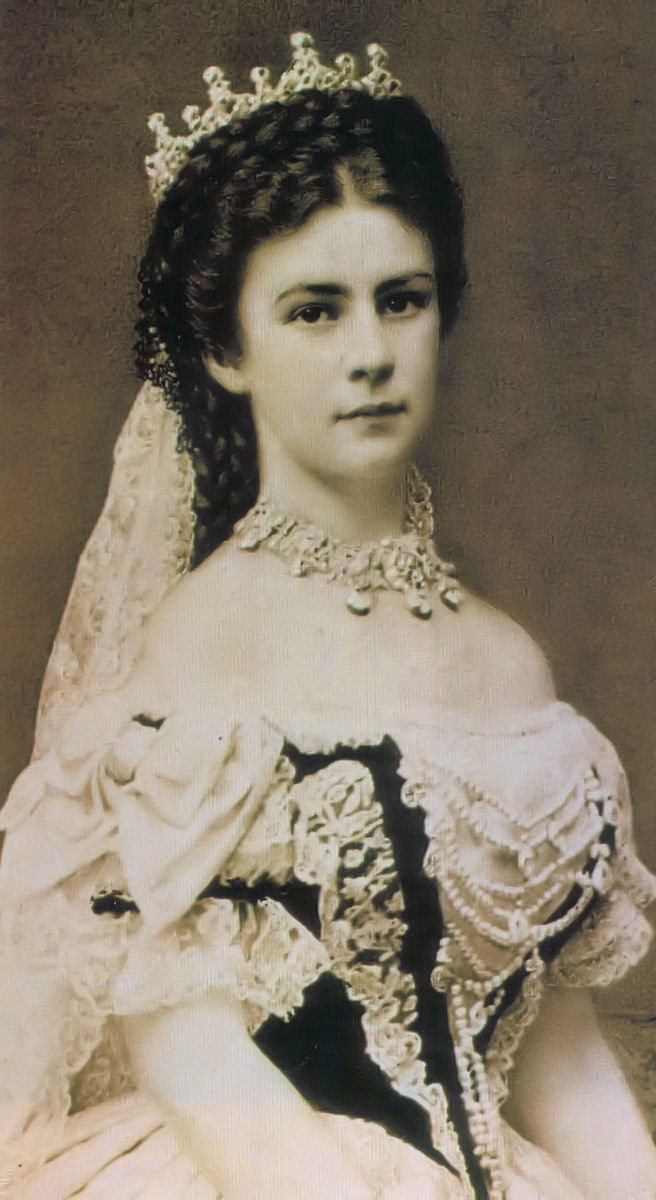
Empress Elisabeth of Austria, known across the continent simply as Sisi, was celebrated for her luminous complexion, her ankle-length chestnut hair, and a figure so slender it seemed almost physically impossible. What her admirers did not know was the industrial scale of effort — and strangeness — required to maintain that image. Her bedroom, in the grandeur of the Habsburg palaces, doubled as something closer to a macabre laboratory.
Her beauty regime was not vanity in the ordinary sense. It was a full-time occupation, and by the end of her life, something closer to a compulsion.
Historical Background
Elisabeth Amalie Eugenie was born in 1837 into the Bavarian royal house of Wittelsbach. At sixteen, she married Emperor Franz Joseph I of Austria in a union that transformed her almost overnight from a free-spirited girl into one of the most scrutinised women in Europe.
The Habsburg court was a place of suffocating protocol. Sisi was expected to perform beauty and poise as a public duty, and the pressure was relentless. Unlike many royal women of the era who simply accepted the constraints of their position, Elisabeth pushed back — but the form her resistance took was deeply personal and, at times, deeply strange.
She was born into an age fascinated by the science of beauty. The Victorian era produced a booming market in cosmetic treatments, tonics, and potions, many of them medically dubious and some outright dangerous. Aristocratic women across Europe experimented with lead-based powders, arsenic complexion wafers, and corsets tight enough to deform internal organs. Sisi's rituals, while unusual even by these standards, existed within a broader culture that treated female appearance as something to be aggressively engineered.
She was also, by most accounts, acutely intelligent and profoundly unhappy. The beauty obsession was inseparable from her psychology.
What Happened
The Meat Mask
Sisi's most notorious ritual involved a custom-made leather mask, fitted to her face and lined with thin slices of raw veal. She wore it every night as she slept, believing the cold meat and its juices acted as a natural astringent — tightening the skin, closing pores, and slowing the appearance of wrinkles.
Each morning, her face was washed with distilled water. The evidence of the night was removed before she appeared in public. The mask itself was, by any standard, a deeply unsettling object: a piece of fitted leather, blood-tinged from repeated use, stored somewhere in the private quarters of the imperial palace.
When raw veal was unavailable or impractical, she turned to alternatives. A paste made from crushed strawberries was applied to her face, neck, and hands to whiten and soften the skin. The effect was, reportedly, effective. The experience — lying still while smelling faintly of fruit pulp — was perhaps less glamorous than the results suggested.
Olive Oil and Vinegar
For her body, Sisi rejected standard soaps entirely. She bathed instead in warm olive oil, soaking for extended periods in the belief that it was the only substance capable of maintaining her skin's elasticity as she aged. The baths were long, costly, and logistically significant: heating and filling a bath with olive oil at imperial scale required considerable preparation.
To preserve her famously tiny waist — maintained at a reported 16 inches throughout much of her adult life — she underwent regular wrapping treatments. Cloths soaked in warm vinegar were wound tightly around her torso. The vinegar was thought to tighten and condition the skin beneath the corset. The process was uncomfortable. The smell was, by all accounts, considerable.
The Weight of Hair
Perhaps the most physically demanding aspect of her routine was her hair. Sisi's chestnut locks fell to her ankles and weighed approximately five kilograms. The weight alone caused her chronic, debilitating migraines. The maintenance required was extraordinary.
Every morning, her personal hairdresser, Fanny Feifalik, spent three hours brushing, arranging, and braiding the mass. Feifalik was required to present any hair that had fallen out during the session on a small silver tray for the Empress's inspection. Too much shedding was treated as a professional failure.
Once a fortnight, the hair was washed. The recipe was precise: 30 raw egg yolks, beaten and combined with cognac, worked through the full length of the hair. The process consumed an entire day. While the mixture dried, Sisi was effectively immobile — unable to leave her chair, unable to conduct audiences, unable to do much at all except sit beneath the weight of her own spirit-soaked hair.
The Obsession Deepens
As she entered her thirties, the rituals intensified and began to take on a more controlling character. After her 32nd birthday, Sisi refused all further portraits and photographs. She had, in a sense, decided that her image was complete — fixed at the moment she considered herself most beautiful. Any newer representation would only document decline.
She walked obsessively, sometimes up to ten hours a day, at a pace her ladies-in-waiting struggled to match. She exercised rigorously while wearing heavy leather corsets. She ate very little. By the standards of the day, some of what she did would now be recognised as disordered eating.
Her public appearances grew rarer. She carried a large fan or parasol almost everywhere, partly to block the sun from her skin and partly to shield her face from onlookers. The woman who had once been one of the most painted figures in Europe became, in her later years, almost impossible to see clearly.
Why It Was Strange
The ingredients Sisi used — raw meat, egg yolk, olive oil, fruit — were not, individually, without precedent in period beauty culture. Folk remedies and organic treatments had circulated among European women for centuries. What set her regime apart was its scale, its rigidity, and its cost in human time.
Three hours of daily hair maintenance. Full days lost to fortnightly washes. Nights spent beneath raw meat. An entire bath filled with oil. These were not casual experiments. They were a structured, relentless programme maintained across decades, supervised with the same seriousness as any imperial duty.
There is also the question of what the rituals meant psychologically. Sisi had very little control over her political role, her public image, or the demands of the Habsburg court. Her body became the one domain where she could exercise absolute authority. The grotesqueness of some of her methods may have been, at least in part, beside the point. What mattered was the discipline, the routine, and the sense that something was being managed.
The irony is that the obsession she believed would preserve her eventually isolated her. The beautiful Empress became a reclusive figure, veiled and half-hidden, more ghost than monarch.
Historical Legacy
Sisi was assassinated in Geneva in 1898, stabbed by an Italian anarchist named Luigi Lucheni. She was 60 years old. The wound was so narrow that she initially did not realise she had been fatally injured, and walked a short distance before collapsing.
Her image — the young, luminous Empress with the extraordinary hair — has never faded. She remains one of the most recognisable figures of the Habsburg era, the subject of films, musicals, and a museum in Vienna dedicated entirely to her life. The Sisi Museum at the Hofburg Palace draws hundreds of thousands of visitors each year.
What that image tends to leave out is the machinery behind it. The leather mask. The cognac-soaked hair. The olive oil baths. The vinegar wraps. The three hours of daily brushing. The woman who achieved one of history's most celebrated looks did so through a regime that was, by any reasonable measure, exhausting, expensive, and frequently unpleasant.
Her story is often read as a romantic tragedy: the free spirit crushed by imperial duty. It is that. But it is also something more specific — an account of what it cost, in the most literal and physical sense, to be considered beautiful in a nineteenth-century royal court, and what a person might sacrifice in the attempt to remain so forever.
Sources
See full source list below.

Written by
The History, But Strange Team
We dig into the weirdest, strangest, and most forgotten corners of real history. From bizarre royal scandals to unusual medical practices and darkly funny disasters, our team researches and writes about the stories your textbooks left out.